Electrifying Trucks: From Delivery Vans to Buses to 18-Wheelers
Nicole Lepre2020-02-25T13:24:49-05:00This paper surveys the opportunities and barriers for electrification of trucks and buses, the state of the market, and the policy landscape.
This paper surveys the opportunities and barriers for electrification of trucks and buses, the state of the market, and the policy landscape.
In this study for the Colorado Energy Office, RMI performed a comparative analysis of three proposed tariffs that are specifically designed to meet the needs of the unique type of load presented by DC fast chargers (DCFCs) for electric vehicles.
This report provides an overview of public and utility funding for three major categories of medium- and heavy duty EVs: transit buses, school buses, and trucks. It builds on recent reports covering the market in California and finds that the business case for investing in electric buses and trucks is improving and electric models already have lower lifetime costs than conventional models in some cases.
This report presents the results of a comprehensive study to compare the emission, cost, and economic and jobs impacts of alternative technologies for the MD and HD transportation sector. The analysis was conducted to better understand the type and pace of alternative vehicle technology and fuel implementation required for California to achieve its public health goals.
This report explores policy options for medium- and heavy-duty electrification and argues that policy approaches should center on improving air quality in communities most burdened by vehicle pollution.
NACFE’s purpose in this report is to help clarify in an unbiased way the differences and similarities in this intimidating wide spectrum of developing powertrain choices facing fleets.
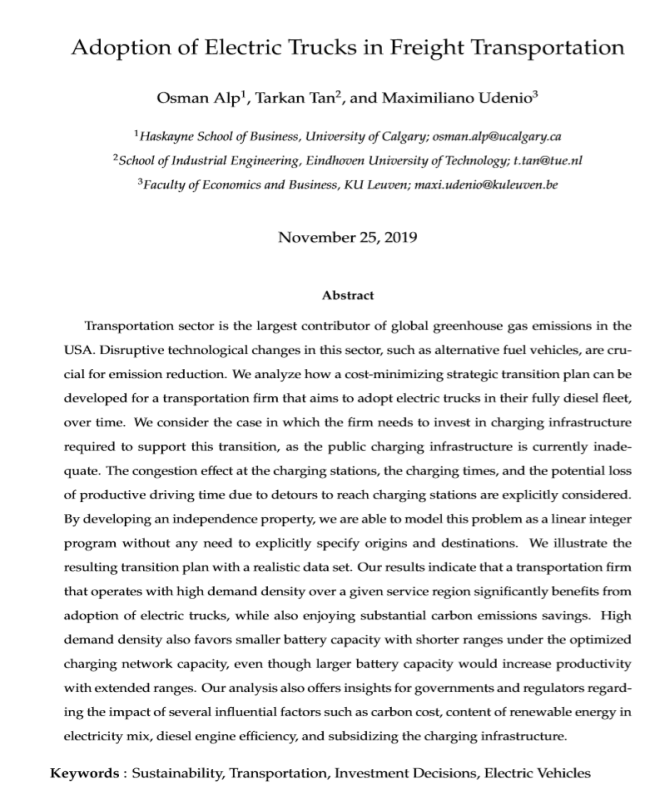
Transportation sector is the largest contributor of global greenhouse gas emissions in the USA. Disruptive technological changes in this sector, such as alternative fuel vehicles, are crucial for emission reduction. This report analyzes how a cost-minimizing strategic transition plan can be developed for a transportation firm that aims to adopt electric trucks in their fully diesel fleet, over time.
This report provides a framework for helping consumer advocates analyze EV policy options (including ratepayer-funded transportation electrification programs) and ensure that the benefits of EV adoption are equitably distributed across customers.
This briefing assesses metropolitan area-level data on electric vehicle registrations and identifies the 25 largest electric vehicle markets, which together represent 42% of new passenger electric vehicle sales globally through 2018.
This report presents the findings of the Sierra Club's recent nationwide investigation into the shopping experience for consumer EVs. The report results show that 74 percent of auto dealerships surveyed do not have a single EV on their lot for sale and that consumers were still not being given important information about charging, battery range, and financial incentives.
© 2026 Built by Atlas Public Policy in Washington, DC