Image Source: Shutterstock
In March, Stellantis became the last major electric vehicle (EV) automaker to gain access to the vast network of Tesla Superchargers across the United States. The milestone is especially notable in an industry that still faces adoption challenges driven, in part, by concerns about the availability and ease of en route charging. While too early to tell if the Stellantis development signals a definitive shift towards charging standardization, increased coordination across EV automakers and charging providers may help shape the EV market in the long-term.
The Tesla Network
Until just a few years ago, Tesla’s charging technology was entirely exclusive to their own vehicles and their Supercharger network, preventing non-Tesla EVs from repowering at Superchargers and Teslas from charging at other networks’ stations. In 2022, Tesla announced they would make their North American Charging Standard charging connector, later certified as SAE J3400, available to other electric automakers and charging service providers.
Today, drivers of EVs from 21 automakers have access to most of Tesla’s extensive Supercharging network. Stellantis, which offers eight battery electric vehicle models across its Jeep, Dodge, Ram, Fiat, and Maserati brands, was the last major manufacturer to join Tesla’s list of supported vehicles. Like many other non-Tesla EVs currently on the road, Stellantis vehicles use the Combined Charging System (CCS), meaning drivers must purchase an adapter to connect to Superchargers’ J3400 ports. Several manufacturers, however, have begun equipping new models with native J3400 ports, allowing for seamless connection at Supercharger sites. The 2025 Hyundai Ioniq 5 was the first non-Tesla to come with a J3400 port installed and at least eight other automakers have followed suit. Stellantis has announced that its 2027 Dodge Charger EV will be the first in its lineup to feature a native J3400 port.
The Fast Charging Landscape
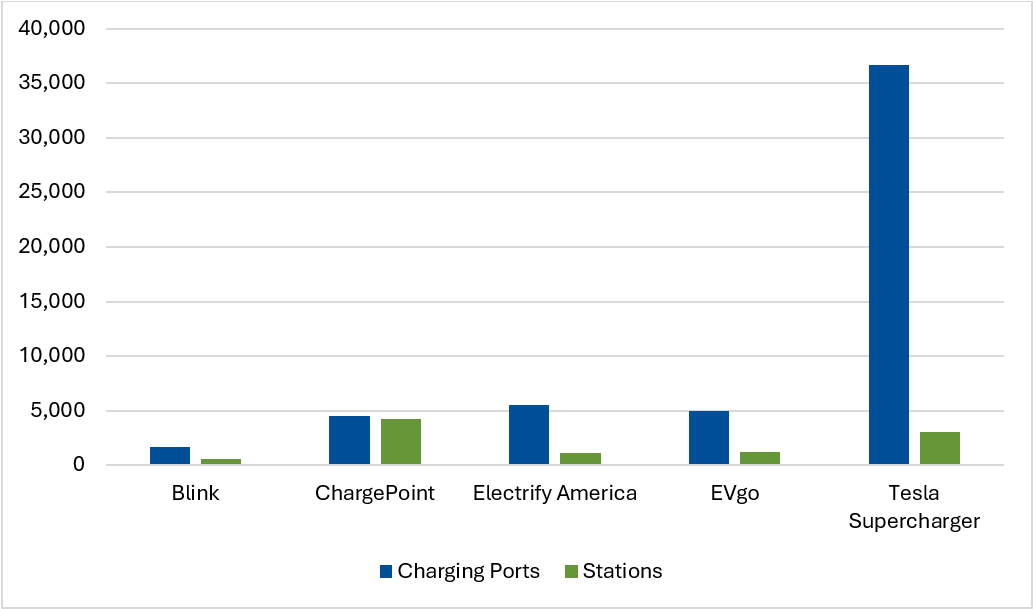
Figure 1. Top 5 Networks by DCFC Port Count
Source: EV Hub Charging Deployment Dashboard
Tesla operates the largest Direct Current Fast Charging (DCFC) network in the country by port count, with almost 37,000 ports across more than 3,000 stations nationwide. Data from EV Hub’s Charging Deployment Dashboard reveals that Tesla controls 52 percent of the DCFC market and has more than double the number of DCFC ports as the combined total of the next four top networks—Electrify America, EVgo, ChargePoint, and Blink. As more vehicles gain compatibility with Tesla Superchargers, the network itself continues to expand. Last year, Tesla added over 6,000 new DCFC ports nationwide, more than any other year before. The second largest network expansion was by EVgo, which added 1,200 new DCFC charging ports in 2025.
Tesla charging ports are highly concentrated. On average, Tesla charging sites have 12 ports per station, compared to three ports per station across all other DCFC networks. ChargePoint, which operates over 1,000 more individual DCFC stations than Tesla, averages just one DCFC port per station. While Tesla’s charger deployment reduces the likelihood that drivers have to wait to plug in when they arrive at a station, it also means ports are dispersed across fewer locations, potentially limiting driver options for where to charge on the road. Because most DCFC ports outside of the Tesla network use CCS technology, drivers of CCS-equipped EVs with a J3400 adapter on hand may have the greatest fast charging flexibility.
The buildout of CCS charging stations was driven, in part, by federal funding from the National Electric Vehicle Infrastructure (NEVI) program which aimed to deploy electric vehicle charging along high-traffic corridors nationwide. Since the outset of the program, NEVI-funded chargers have been required to have at least four CCS ports; J3400 technology is supported only if the site first meets the CCS threshold. Thus far, NEVI has awarded $653.1 million to fund 4,000 DCFC ports nationwide, and states continue to issue funding.
Given that most EV models only come equipped for charging with either a CCS port or a J3400 port, expanding charging infrastructure for both connector types is essential to allow for reliable and accessible en route charging for all EV drivers. We’ll be monitoring developments across charging standards and DC Fast Charging networks nationwide as the electric transportation landscape in the United States continues to evolve.