Image Source: Shutterstock
Batteries are the powerhouse of the clean economy, and the industry is heating up. Last month, we covered a new report from my colleagues on The Race for Clean Energy Leadership, which found that battery manufacturing leads global clean tech investment, with China controlling upwards of 70 percent of cell manufacturing capacity. Recent headlines point to emerging technologies largely out of China—including solid-state and sodium-ion batteries—that may be poised to disrupt the EV market.
Battery Innovation
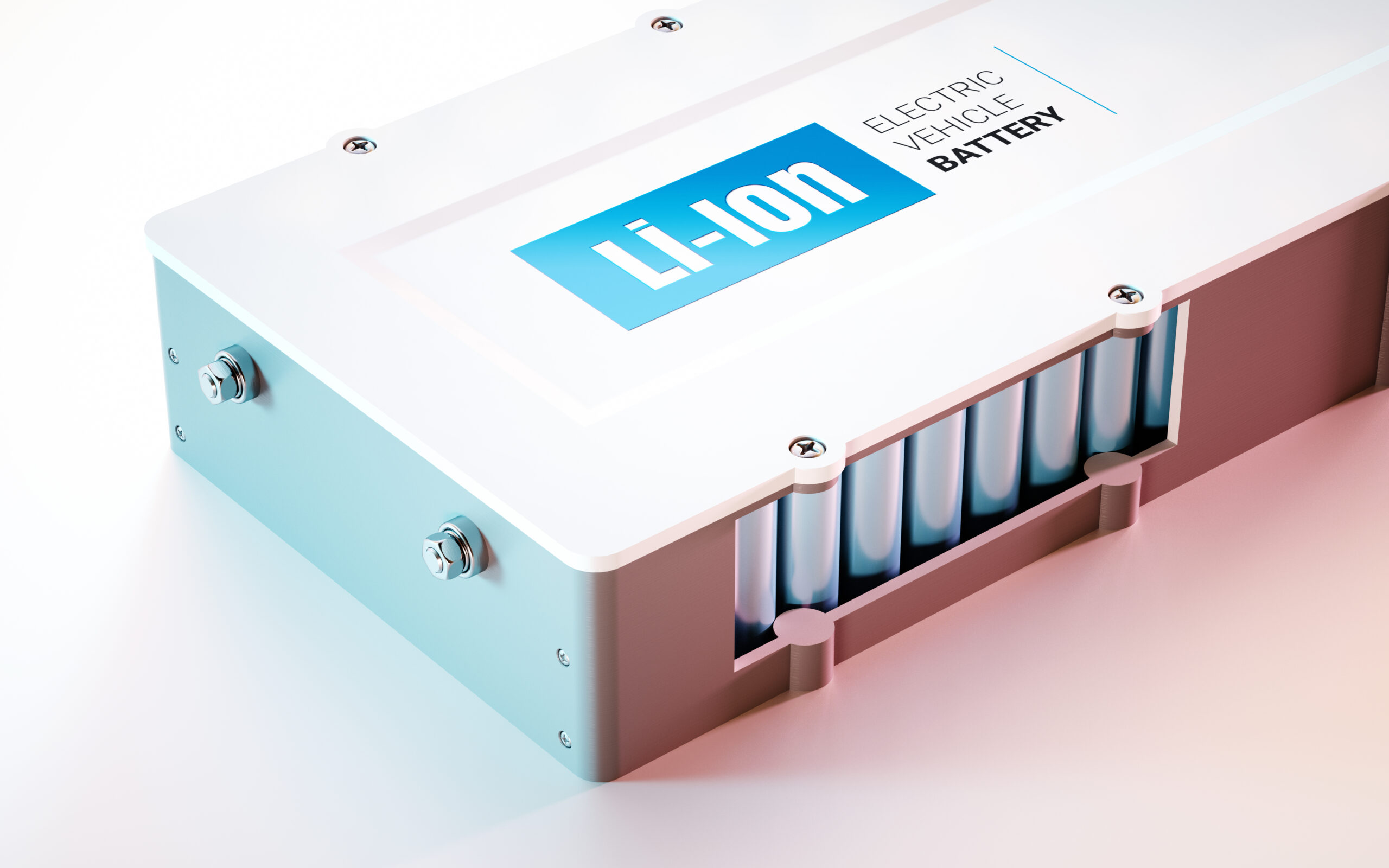
Most EVs on the road today are powered by lithium-ion batteries. Balancing energy density for longer driving range with relatively low costs, lithium-ion batteries have become the industry standard. Yet manufacturers have increasingly looked to develop alternative solutions to improve range, affordability, and safety in the batteries that power EVs.
A recent study found that the sodium-ion battery produced by Chinese manufacturer Hina is comparable to Tesla’s lithium-ion battery in manufacturing quality. Although sodium-ion batteries have a lower energy density than their lithium counterparts, the relative abundance of sodium offers possible cost advantages. Sodium-ion technology highlights the tradeoff between range and affordability in the EV market but could help bring lower-cost, shorter-range EVs to more consumers. In April, Chinese battery manufacturer CATL announced plans to introduce sodium-ion batteries in its mass market EVs later this year, signaling early commercialization efforts.
Chinese companies have also taken the lead in developing solid-state batteries, often seen as the “holy grail” of EV battery technology. These batteries use a solid electrolyte instead of a liquid one, potentially allowing for longer driving ranges, faster charging speeds, and safer operations. Challenges around durability, cost, and scaling for real-world deployment remain, but manufacturers are pushing to overcome these hurdles—creating a critical moment for investment in the sector.
Competitive Investment Trends
Advancements in battery technology are unfolding as investment slows in the United States. While EVs accounted for 70 percent of global battery deployment in 2025, some American manufacturers are increasingly moving investments away from EV batteries towards stationary energy storage systems (ESS).
Although sales data from April 2026 suggests that the EV market in the United States may be starting to recover from its downturn in 2025, momentum has already shifted away from EV battery production. According to Atlas’s Clean Economy Tracker, EV battery manufacturing has seen $513.8 million in net negative investment so far in 2026, while ESS manufacturing has attracted $2.6 billion in net positive investment. One example is Ultium Cells, a joint venture between General Motors and LG Energy Solution, which announced it will shift a portion of battery production at its Tennessee-based plant from EV applications to stationary storage.
At the same time, some American companies are attempting to re-enter the battery innovation race. For instance, U.S.-based startup QuantumScape is partnering with Honda in a joint research agreement focused on solid-state battery development and manufacturing processes for EV applications. QuantumScape has also begun production for its solid-state pilot at its manufacturing facility in San Jose.
Whether these developments will eventually translate into large-scale deployments of next-generation batteries here in the United States remains to be seen; EV Hub will continue to monitor advancements and investments in battery tech to see how the sector evolves.
Co-written by Indrani Malhotra and Kai Foster