Image Source: Shutterstock
Amid a tumultuous year for electric vehicles (EVs), a slew of disruptions to the National Electric Vehicle Infrastructure (NEVI) program have raised questions about the future of public charging investment. In a new fact sheet published last week, my colleague Rachael Nealer breaks down the current state of NEVI funding and explores what recent changes could mean for EV charging buildout nationwide.
The NEVI program, introduced in 2021 as part of the Infrastructure Investment and Jobs Act, is a five-year, $5 billion effort to build out EV charging infrastructure along major corridors across the country. Through the program, states submitted EV infrastructure plans for federal approval and received funding to award contracts and deploy chargers. Recently, however, NEVI has faced a series of federal roadblocks, including a suspension in February 2025 and a congressional funding rescission in January 2026.
The rescission claws back almost $504 million from 30 states and territories that had not obligated all of their funding from the program’s first fiscal year—a loss that translates to an estimated 3,700 charging ports. Many of these states had already issued Requests for Proposals (RFPs) to spend funds that are no longer available, leaving them with a difficult choice: scale back their NEVI plans or find other state or federal funding sources to fill the gap.
Despite these setbacks, many states are still charging ahead with EV infrastructure investment. An estimated $739 million has already been awarded to fund charging deployment, and about $4 billion of program funds remain. The fact sheet finds that the NEVI program could support the addition of 22,200 Direct Current Fast Charging (DCFC) ports nationally, enough to serve up to 3.7 million EVs (Figure 1). NEVI has also helped catalyze private-sector momentum, with private investment matching public dollars at a roughly two-to-one ratio.
Figure 1: Estimated EVs Supported by NEVI
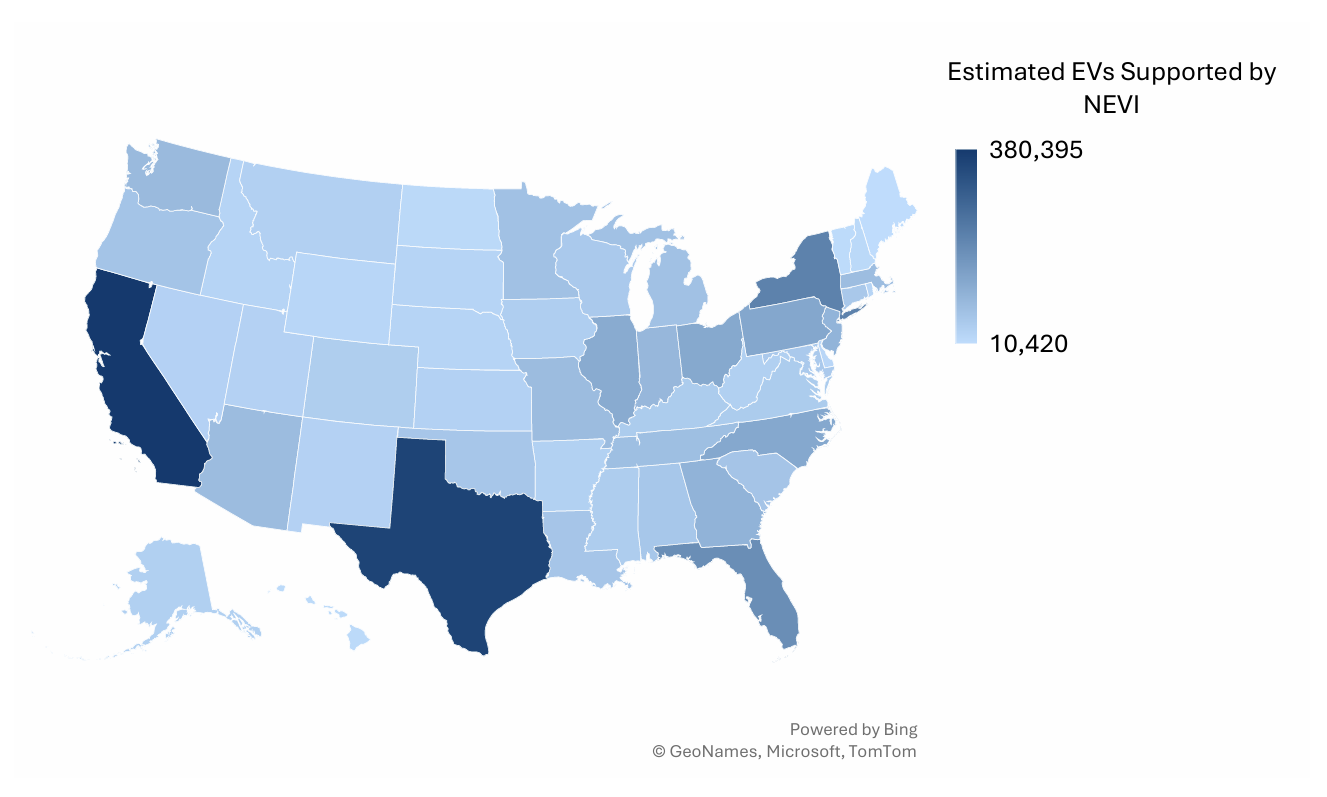
Estimates number of EVs supported by NEVI ports possible per state with remaining funding.
Source: Atlas analysis of data from FHWA and NLR.
Deployment is also already underway. There are currently 828 NEVI-funded DCFC ports in operation (Figure 2), and states are continuing to award contracts and issue additional RFPs. Seven states currently have open RFPs under the NEVI program, totaling more than $207 million in available funding. Three of those states are among the 12 states nationwide that have reached ‘fully built-out’ status, meaning they have adequate charging coverage along designated Alternative Fuel Corridors. These states can award funds more flexibly, targeting other EV priorities like chargers in local communities or for medium- and heavy-duty vehicles. For example, Pennsylvania issued Community Charging RFPs for Level 2 and Direct Current Fast Chargers in its Southeastern and Western regions.
Figure 2: Operational NEVI Funded Charging Sites
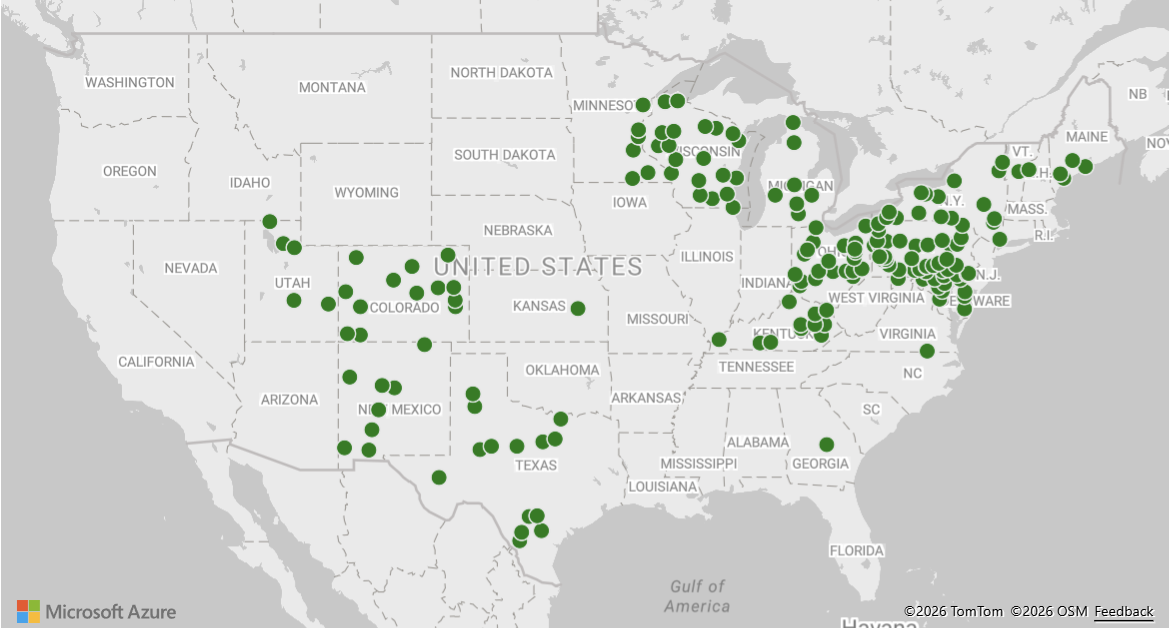
Source: EV States Clearinghouse, last updated June 2026.
Some states are also working to boost EV adoption through complementary policies. Earlier this month, Governor Newsom signed a bill enacting rebates for first-time EV buyers in California. The program offers $3,500 off the purchase of a new EV or $1,750 off a used EV. With EV affordability and public charging availability consistently cited as top consumer concerns with EVs, state action can play an important role in sustaining EV adoption and infrastructure deployment amid federal uncertainty.
To learn more about public charging and the future of NEVI, be sure to check out the full fact sheet here.