Image Source: Slate Auto
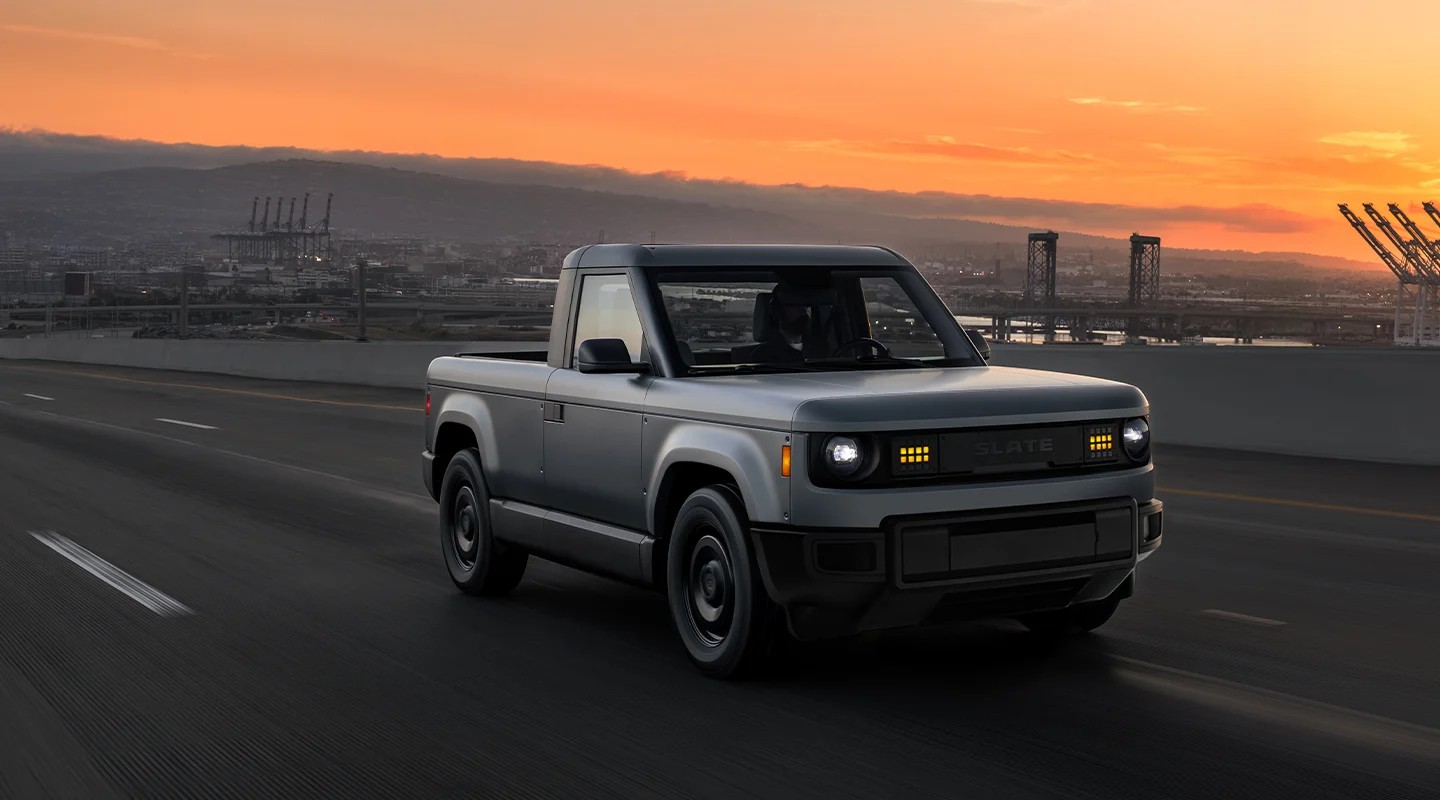
Upfront cost remains one of the largest obstacles to electric vehicle (EV) adoption, and one EV startup is betting everything on affordability. In June, Slate Auto unveiled the Slate Truck, an electric pickup with an advertised starting price of $24,950, an estimated range of 205 miles, and a do-it-yourself approach to customizing everything from the frame to the interior. If that price point holds when the truck launches at the end of this year, it could become one of the least expensive EVs on the U.S. market and one of the first electric pickups to approach price parity with comparable gas-powered models.
However, that price does not include the standard amenities of most modern vehicles: the “essential” Slate rolls off the line with no paint, no stereo, and a minimalist interior. This stripped-down design lowers the vehicle’s upfront cost and represents a new approach to the EV market—one focused on affordability rather than maximizing range, performance, and premium features.
How Does it Compare?
The Slate Truck is advertised as “the most affordable truck in America,” and its listed starting price could have it compete with gas-powered vehicles. On the EV Market Dashboard, only a handful of EVs are listed under $30,000, and the cheapest electric pickup costs more than double the base price of the Slate. The Slate Truck’s steepest competition comes from conventional trucks, such as the $27,732 GMC Canyon. Even so, its $24,950 base price makes it one of the few EVs to compete with a comparable gas-powered model.
The truck’s low advertised price is tied directly to Slate’s customization strategy. Rather than bundling features into the base vehicle, Slate shifts many standard features to modifications that consumers purchase separately. However, to match the features of its closest gas-powered competitors, it would cost roughly $1,180, not including installation costs or the shipping fee. Some features, such as a backseat, require purchasing an additional SUV modification. For buyers desiring more than the basics, these costs can quickly add up.
Affordability in Focus
For many car buyers, affordability is the most important factor when making a vehicle purchase. JD Power’s 2025 EV Purchase Consideration poll found that 43 percent of consumer rejection of EVs is due to purchase price concerns. According to a 2025 study, income inequality is one of the largest obstacles to widescale EV adoption, as low-income households often find EVs unaffordable. EVs like the Slate Truck, which offer low upfront costs in exchange for fewer features, may help open the market to a wider range of buyers.
In a market that has been defined by advanced technology and premium features, Slate is effectively testing whether affordability can be a stronger selling point. If buyers embrace that tradeoff, it could point to a new pathway for improving EV affordability, accessibility, and adoption.