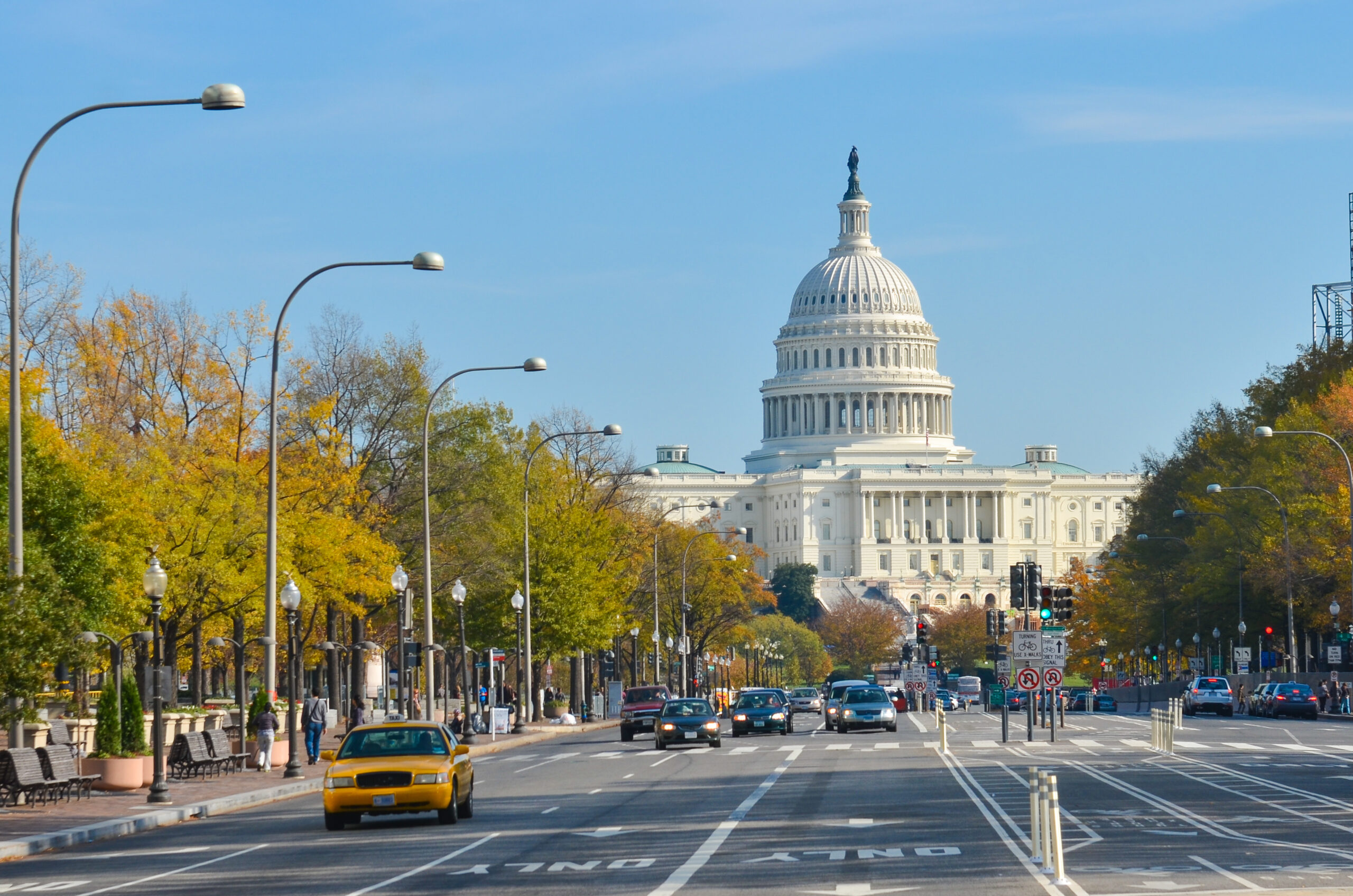
As 2026 began, attention grew around the process known as ‘reauthorization’. The current surface transportation package—the Infrastructure Investment and Jobs Act (IIJA)—expires at the end of September and, although a new bill is unlikely before then, the advocacy and negotiations happening now will shape the next reauthorization bill. The EV Hub team is tracking developments from Congress and transportation electrification advocates.
What is Reauthorization?
Surface transportation reauthorization is the process through which Congress sets policies, priorities, and funding for highways, transit, active transportation, EV charging, and other transportation infrastructure. These multi-year laws are funded through the Highway Trust Fund (HTF) which has not kept pace with the increasing cost of modernizing and maintaining transportation infrastructure. General tax dollar funding has been repeatedly transferred into the HTF, and the Congressional Budget Office estimates $330 billion is needed over the next 30 years to keep the trust solvent. House Transportation and Infrastructure Chair Sam Graves (R-MO) said that one of his reauthorization priorities is to “shore up the Highway Trust Fund.”
Funding is just one complication in an already complicated process involving seven different committees across the Senate and the House. Bipartisan agreement will be needed to come to a consensus on how to pay for the package and what infrastructure types to prioritize. Once passed, The House and Senate bills must then be reconciled before a final deal can be reached and sent to the President for signing. Passing such a large bill is a tall order for any legislative body but, in a Congress that has struggled to find agreement and to pass appropriations bills, a new authorization bill is unlikely before IIJA expires. Reauthorization delays are not uncommon, but the timeline is worth watching, especially with midterms this fall and a new Congress starting in January.
The Current Authorization Law
The current authorization law, the Infrastructure Investment and Jobs Act (IIJA), was signed on November 15, 2021 and directed billions of dollars to EV charging, programs to reduce emissions, and formula programs that historically have dedicated most funding to highways but were afforded more flexibility to spend on transit, active transportation, EV charging, and more. Pivotal for clean transportation, IIJA created new programs like the National Electric Vehicle Infrastructure (NEVI) program and expanded funding opportunities for transportation electrification in existing programs such as the Low- or No-Emission Grant Program for public transportation buses (Low-No). Despite implementation challenges and delays, IIJA has produced measurable results across programs and infrastructure types. States have awarded NEVI funding for more than 4,000 charging ports, and nearly 60 percent of highway corridors now have DC fast chargers every 50 miles. Demand for Low-No grants was six times greater than available funding.
What to Watch for in Reauthorization
IIJA invested billions in transportation electrification, but the future of those programs in reauthorization is uncertain, especially given the shortfall of HTF funds and shifting federal priorities. The shortfall, however, long predates IIJA investments in EV-related programs and is unlikely to be fixed by cutting funding for non-highway programs.
Priorities and Programs
Chairman Graves promised a “return to basics,” emphasizing roads, bridges, and other “fundamental infrastructure needs.” In the Senate, Chairwoman Shelly Moor Capito (R-WV) agrees that the bill should be “streamline[d] back to its original core functions.” At the same time, states have shown interest in EV-related funding and early implementation points to economic and public health benefits. Together, the Inflation Reduction Act and IIJA investments supported $4.6 billion and created over 14,400 jobs in domestic manufacturing. If fully realized, NEVI and the Charging and Fueling Infrastructure Grant Program could support 17,000 potential jobs and have $4-5 million in health savings annually. Continued federal support of these programs not only ensures these benefits, but is also the most efficient way to continue federal EV charging funding. Atlas estimates that $12-$39 billion from government and utilities is needed to build the public charging infrastructure required to support projected 2035 EV adoption.
Incorporating Lessons Learned from IIJA
Should some of the landmark IIJA programs, such as NEVI, be revisited or similar programs created in reauthorization, there are opportunities to improve program design and streamline implementation. States building and operating EV charging programs for the first time under NEVI learned valuable lessons on program design, administration, and capacity building. Technical assistance from the Joint Office of Energy and Transportation was critical, and states and partners identified ways to streamline applications and shorten timelines, such as earlier utility involvement. EV charging programs included in reauthorization should prioritize faster distribution of funding and greater flexibility for states and award recipients.
The EV Hub team will continue to monitor reauthorization and share major updates as they occur.