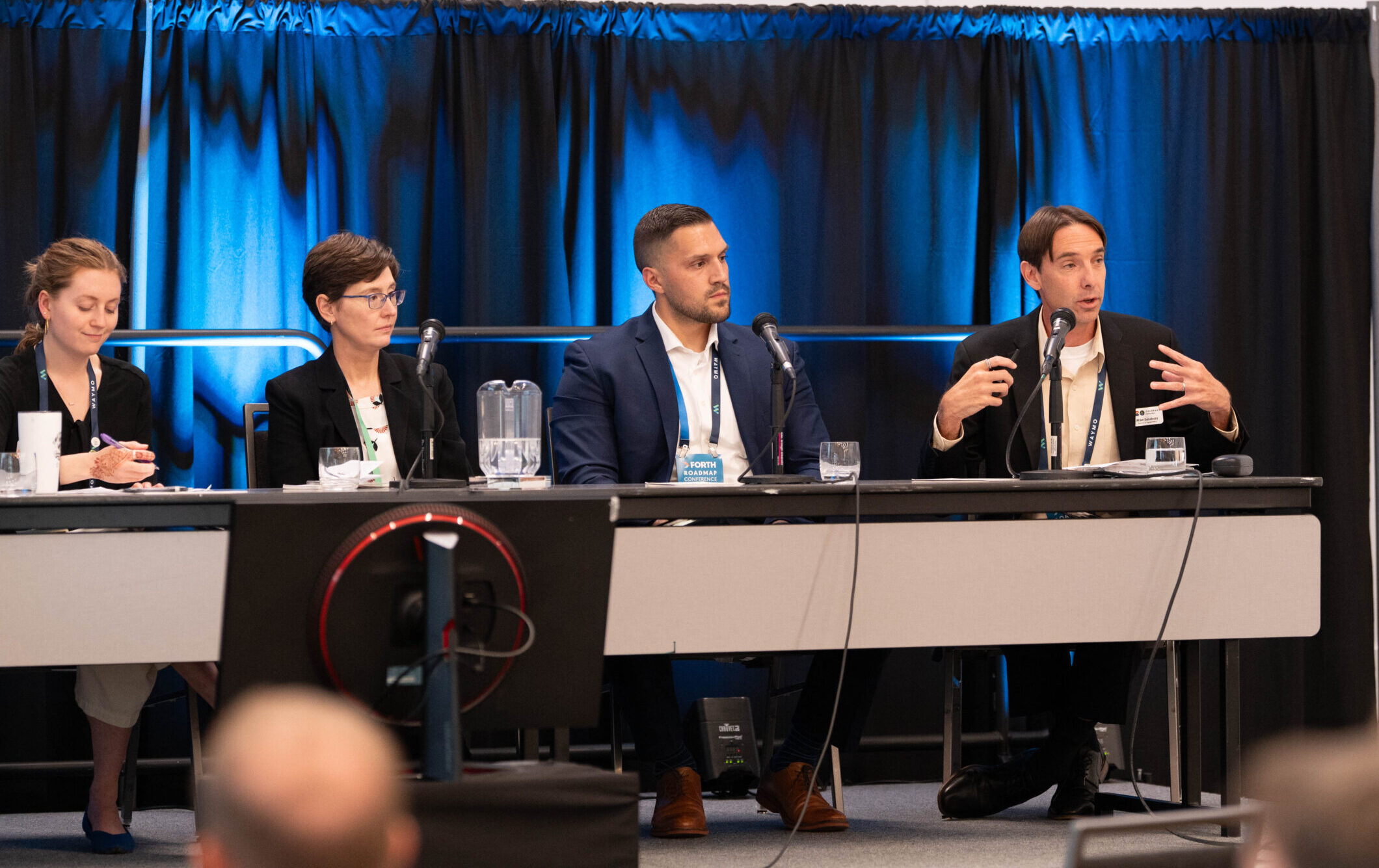
Tina Hodges (second from left), Senior Policy Analyst at Atlas Public Policy, speaking on a panel at the 2026 Forth Roadmap Conference in Seattle last month.
Image Source: Social Enterprises, Inc.
Last month, members of the transportation electrification community gathered in Seattle for the 2026 Forth Roadmap Conference. Atlas staff Nick Nigro, Tina Hodges, and Lucy McKenzie joined conversations spanning from charging deployment, battery manufacturing, utility programs, and community mobility. Below are a few of their takeaways from the conference.
States are connecting charging investment with affordability
Tina: It was exciting to return to Roadmap and connect with so many people working to electrify transportation. I presented findings from Atlas’ report, Charging Up: States and EV Charging Deployment, which highlights best practices state departments of transportation are using to deploy EV charging infrastructure.
Presenting alongside me, Jordan Losiak of ComEd discussed utility incentives for commercial fleet electrification, while Mike Salisbury of the Colorado Energy Office explained how Colorado’s retail delivery fee is supporting clean and affordable transportation. The fee helps fund programs ranging from e-bikes for income-qualified residents to charging infrastructure for passenger vehicles and commercial trucks.
These examples showed how states can make charging investments go further by connecting infrastructure deployment with broader transportation and affordability goals. It was encouraging to see the progress communities are making to expand access and ensure that the benefits of transportation electrification reach more people.
The EV community is entering its next chapter
Nick: Attending Roadmap this year was especially meaningful for me. Having served on Forth’s board for more than five years, the conference offered a chance to reflect on everything the Roadmap community has accomplished. What began as a small, dedicated group focused on proving the viability of electric transportation has matured into a broad effort to deliver affordable, clean mobility that benefits everyone.
This year’s conference also marked an important moment as Forth begins a new chapter with Catalyst Mobility. My conversations with participants reflected both continuity and change: continued optimism about the long-term future of electrification, paired with a clear-eyed view of the challenges ahead.
The policy and market landscape may look different than it did a few years ago, but the commitment across this community remains strong. I left Seattle encouraged by the passion of the people doing this work and their determination to keep making progress. I am also excited about the role Catalyst Mobility will play in shaping the next phase of transportation electrification.
A special thanks to Nick and Tina for sharing their insights from Roadmap 2026. If you attended a session we missed or have a takeaway you think we should highlight in a future Digest, let us know.