Source: Shutterstock
Amid rising electricity costs and increased load growth from data centers, virtual power plants (VPPs) have become a hot topic. VPPs coordinate distributed energy resources, such as rooftop solar, residential battery storage systems, smart thermostats, and electric vehicles (EVs), to support the grid by balancing electricity supply and demand. They can manage electricity use and dispatch power back to the grid when needed, helping reduce grid stress and lower customer costs.
EVs already participate in VPPs through managed charging programs, which can control when participating EVs draw power from the grid, shifting charging times away from peak hours. EVs could play an even larger role, though, by tapping into a key asset: their batteries. When EVs aren’t on the road, their batteries are a valuable energy storage resource. They can be charged when electricity is abundant and later called upon to supply power when the grid is under strain. A recent study commissioned by GM Energy found that vehicle-to-grid (V2G)-capable EVs offer nearly as much grid value as a dedicated home battery, without requiring a separate battery purchase. At a smaller scale, EVs can also power a home when electricity prices are high or provide backup power during an outage.
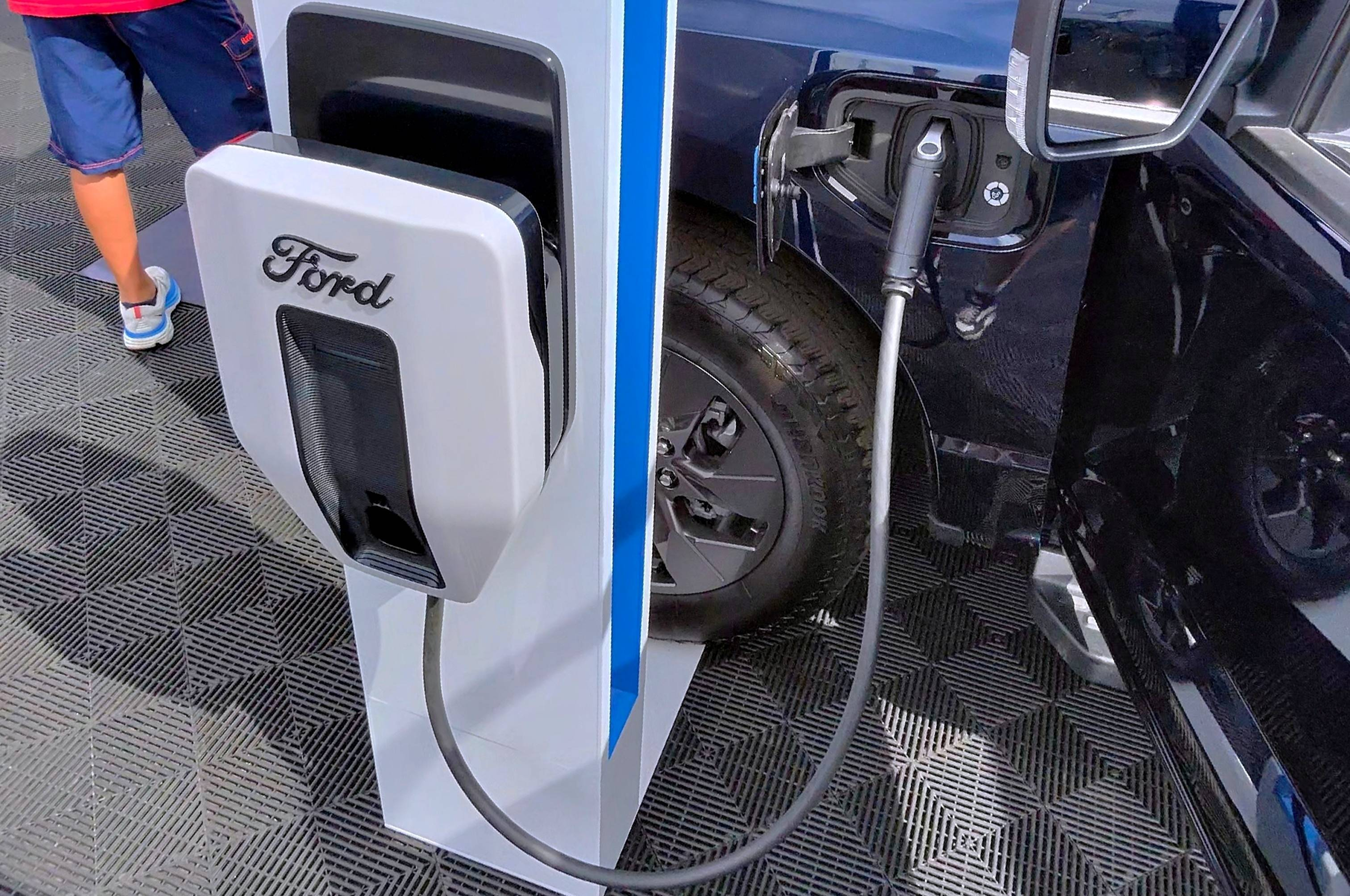
Yet for an EV to send power to the grid or your home, the EV needs to be bidirectional-capable. Not all EVs on the U.S. market have this capability, and most that do require a costly external inverter to convert the EV battery’s power for home or grid use. Enter: the Ford Fathom. Last week, Ford announced that its new all-electric pickup, set to debut in 2027, will have an inverter built into the vehicle itself.
When it was announced in August, the Fathom generated buzz in the EV community, in part for its sub-$30,000 price point that rivals only a few other EVs on the market (see our coverage of Slate Auto’s announcement earlier this year). Now Ford says that the Fathom will be the first in its price range from an American automaker to not require a separate wall-mounted inverter for bidirectional charging. Instead, its inverter will convert the battery’s direct current (DC) into the alternating current (AC) used by homes and buildings.
Final prices for the charging hardware and the back-up panel needed to power homes during outages haven’t been announced. Ford expects both to cost substantially less than its first-generation equipment. And while V2G technology has been promoted as a way to balance energy demand and lower customer costs, adoption so far has been limited. Integrating bidirectional vehicles into VPPs is a complicated process for utilities, but more eligible EVs on the road could give these programs a boost.
As the first Fathoms hit the road next year, we’ll be watching to see how consumers and utilities respond, and whether other EV automakers embrace bidirectional capability too.