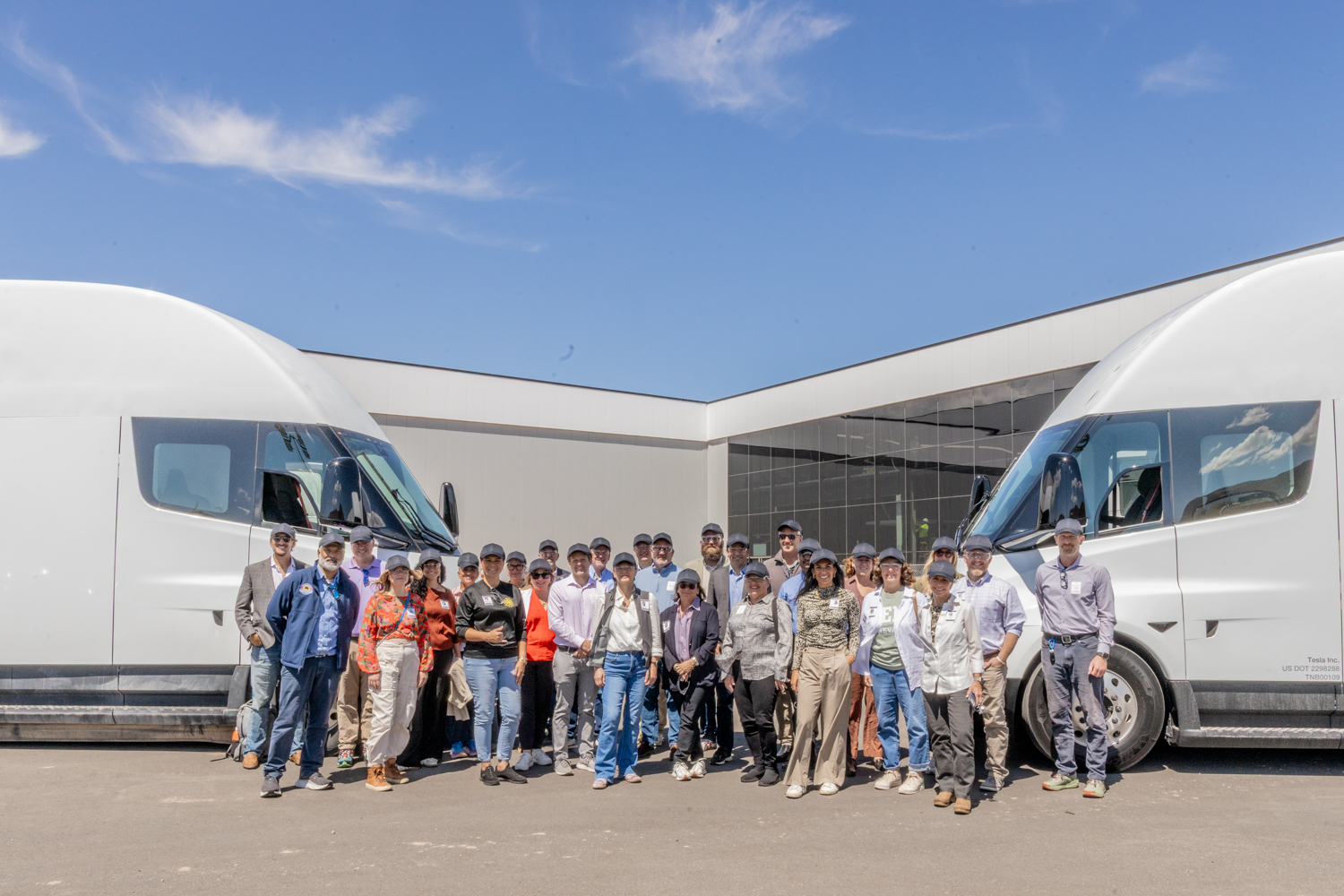
Eric Wood, Principal Policy Analyst at Atlas Public Policy, visited the Tesla Gigafactory in Nevada and toured Tesla’s Semi facility, alongside members of the Electric Innovation Initiative in August 2026.
Source: Tesla
Electric trucks are beginning to move beyond small-scale demos and into commercial operations. But producing more trucks is only one piece of the puzzle. Fleets also need vehicles that fit their routes and schedules, deliver an attractive return on investment, and have access to charging when and where they need it.
These topics were at the forefront of the conversation during a recent visit to Tesla’s Gigafactory in Nevada. In August, Atlas’s own Eric Wood, Principal Policy Analyst, got the chance to visit Tesla’s Gigafactory campus outside Reno, alongside members of the Electric Innovation Initiative, a bipartisan group of state lawmakers. The visit included a tour of the Semi factory and discussions about vehicle performance, total cost of ownership, and policies that could support the adoption of heavy-duty electric trucks. Eric was invited to present Atlas’s ongoing research into policy options for heavy-duty truck charging.
Tesla Ramps Up Semi Production
The tour offered a firsthand look at Tesla’s plans to scale up Semi production. The Nevada factory is designed to house three production lines that will produce roughly 50,000 electric trucks annually. At the time of the visit, one line was operating at partial capacity while construction continued throughout the facility, offering an early preview of what full production could look like.
Plans to scale production are expected to have a massive impact on the industry. Tesla reported during its recent launch event that nearly 200 Semis have been deployed through its pilot program. Demand continues to grow, with Tesla recently selected as the primary manufacturer for an initial ZET Scale procurement of 2,500 battery-electric Class 8 trucks. Combined with fleet pre-orders for the Semi have been stacking up for years, demand for electric trucks is clearly on the rise. Other Class 7-8 electric tractors, including models from Daimler Truck and Volvo Group, reached the market earlier and collectively account for 82 percent of registered EVs in this segment.
Building Charging Alongside the Vehicle
As the Semi starts to roll off the production line, Tesla is tackling another challenge holding back wider electric truck adoption: charging. Deployment of megawatt scale charging remains nascent in the US, but Tesla is beginning to build out a public Megacharger network designed to support electric trucks along major freight routes. The company is implementing the industry-standard Megawatt Charging System (MCS) through this expansion.
Tesla has offerings for charging equipment ranging from 120 kilowatts to 1.2 megawatts, including equipment available for use at non-Tesla public charging stations. Some fleets are considering configurations in which one high-powered charger supports as many as 10 trucks. Tesla also plans to continue to develop public truck-charging stations with between four and 16 stalls.
That buildout is already in motion, through efforts like Tesla’s charging partnership with Pilot Travel Centers. Getting chargers in the ground, though, requires that developers coordinate with utilities, plan for grid upgrades, evaluate rates, secure permits and land, and build charging around existing fleet operations—each of which adds time and cost before the first truck rolls out.
The Road Ahead
The visit to Nevada reinforced that the next phase of electric trucking will not be driven by vehicle technology alone. Manufacturers, fleets, utilities, charging providers, and policymakers will need to move together to make electrification possible. As electric-truck production grows, the bigger test will be whether the infrastructure and policies surrounding these vehicles can keep pace.
“The economics of electric trucking are becoming increasingly compelling, giving fleets a strong incentive to make the transition. What will be fascinating to watch is how the industry rises to the challenge of expanding production, building out charging networks, and proving that these vehicles can perform reliably for years to come.”
— Eric Wood, Principal Policy Analyst, Atlas Public Policy