Image Source: Shutterstock
For weeks, we’ve been watching how the war in Iran has driven up gasoline prices and the potential impact on the EV market. With March 2026 sales data now live on the EV Market Dashboard, we can confirm that EV sales rose after the conflict began, a signal that high prices at the pump may have influenced consumers going electric. While the EV market dropped to a multiyear low in January and inched up only slightly in February, sales rebounded in March to the highest level since federal tax credits expired in 2025. Keep reading for a broad view of sales trends in the first quarter of 2026 and stay tuned for our Q1 Quarterly Review of the EV Market, coming soon.
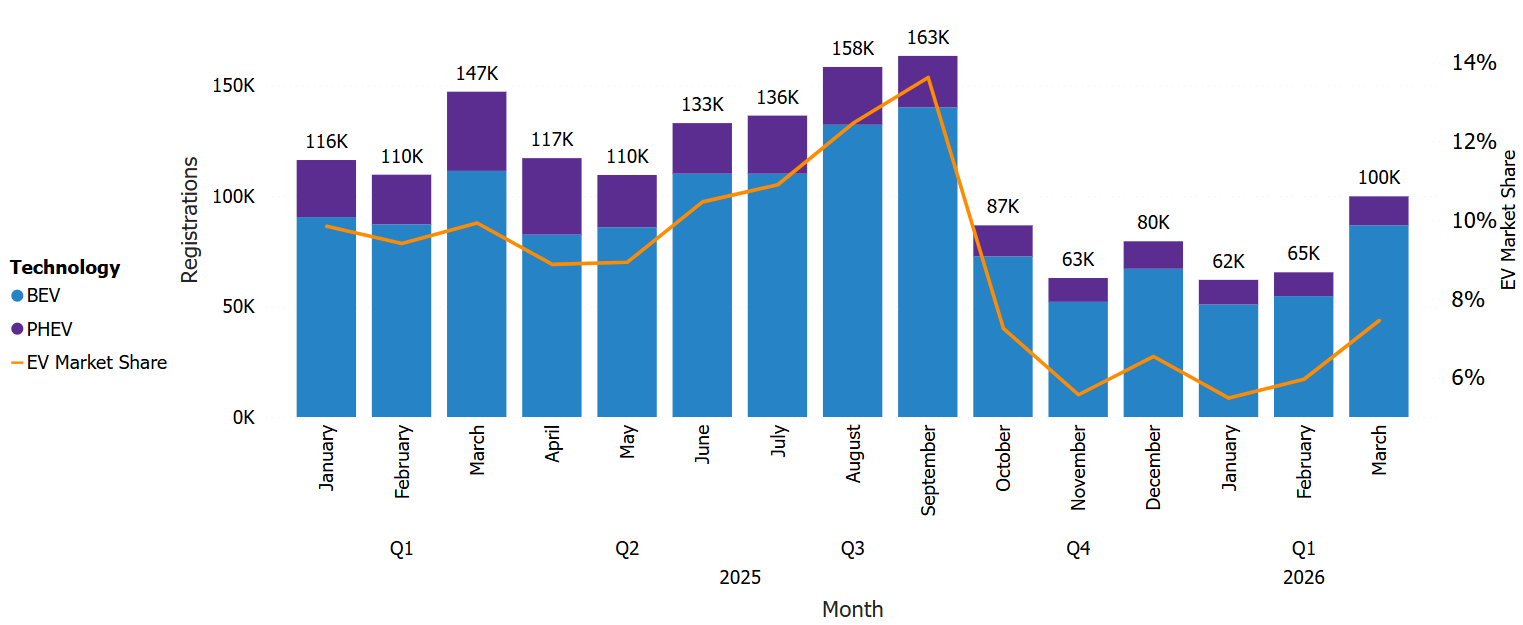
Sales of light-duty EVs—including battery electric vehicles (BEVs) and plug-in hybrid electric vehicles (PHEVs)—totaled approximately 227,000 in Q1, down 39 percent year over year. This continues a trend of low EV sales that began in Q4 of 2025 after federal tax credits expired in September. EV market share in Q1 was 6.4 percent, falling marginally from Q4 (6.5 percent) and more substantially from Q1 in 2025 (9.7 percent).
A month-by-month analysis of Q1 2026, however, paints a more nuanced picture. Sales in January and February resembled those seen in the earlier stages of the EV market, when model availability and public charging were more limited. In January, about 62,000 EVs were sold in the United States, the lowest figure since 2022. Sales rose slightly to approximately 65,000 in February before climbing 53 percent in March to reach nearly 100,000 EVs sold. The increase was even more pronounced in the BEV sector, which saw a 59 percent increase in sales from February to March.
Figure 1: Light-Duty Sales and EV Market Share (January 2025–March 2026)
Source: EV Market Dashboard
EV market share also rose in March, surpassing seven percent for the first time since October. Although the uptick does not offset the quarter’s earlier declines, it may be a sign that the market is responding to the changing economics of vehicle ownership. In the absence of federal incentives, EV sales fell as consumers weighed the higher sticker price of EVs against marginal savings from charging. When gas prices rose by one dollar per gallon between February and March, the cost advantage of EVs became more pronounced: on a per-mile basis, EVs charged at home can cost less than half as much to operate as gasoline vehicles. For many drivers, lower monthly costs are now outweighing the higher upfront price—making EVs a more affordable option.
Used EVs are also gaining traction. The average price for a used EV is now roughly on par with that of a used gas-powered car. When coupled with the savings on fuel costs, the economic case for buying a used EV is getting better. Used EV sales rose by 31.2 percent from February to March, highlighting the importance of affordability in shaping consumer demand.
It remains to be seen how long fuel prices will remain high, and whether March’s sales rebound is the beginning of a new trend. Still, Q1 provides an interesting glimpse into how EV demand responds to market factors. The months ahead could reveal a sales landscape shaped less by federal policy and more by the day-to-day costs of owning and operating a vehicle—a shift we’ll be watching as 2026 unfolds.