While sales of light-duty electric vehicles continue to face political and market headwinds, big advancements in tech and new strategic partnerships in the heavy-duty vehicle sector give room for optimism with freight electrification. April was a notable month in the world of electric trucking, and in this week’s digest, we’re highlighting two stories worth watching.
Tesla Semi Equipped with Million Mile Battery
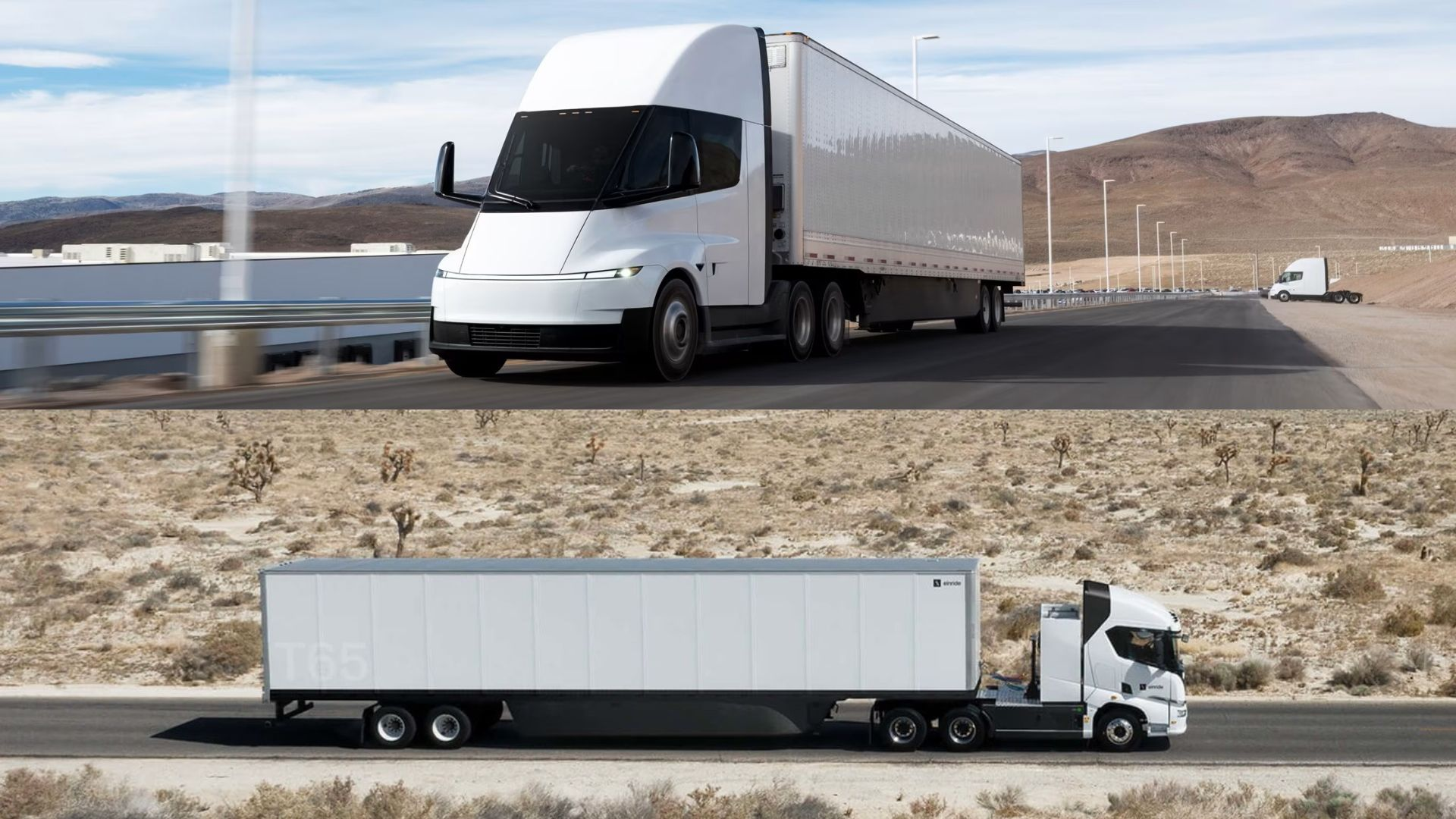
On April 20th, Tesla unveiled the latest advancement in the technology behind their electric Class 8 Semi—a million-mile battery. The company released the final specs for the Semi in February 2026 and the first truck rolled off its high-volume line last week, with deliveries slated to begin later this year. After years of delays, the Semi was a long-awaited addition to the electric truck market and the recent announcement further adds to the Semi’s buzz.
A million-mile battery brings the Semi closer to the lifespan of traditional commercial tractors, which can typically run between 500,000 and a million miles. The Semi is also narrowing the gap between electric and diesel trucks when it comes to range and weight capabilities. The Long Range Semi can drive up to 500 miles on a single charge and can add up to 300 miles in just thirty minutes, using megawatt charging, which aligns with mandatory rest breaks for truckers. While the Semi’s battery is designed for both a long range and lifespan, the truck is also about 1,000 pounds lighter than the previous model. That means that the Semi has roughly the same payload capacity as a diesel truck, solving a key challenge faced by other electric truck-makers.
Until now, the Tesla Semi has been rolled out through limited private deployments. EV Hub’s Market Dashboard shows that only 70 Tesla Semis have been registered nationwide since 2024. Class 8 electric tractors from Daimler Truck and the Volvo Group have been on the market longer, and the two companies collectively hold 82 percent of current market share.
Yet the Semi is already making waves. In California, the Semi’s arrival could push electric tractor sales past the state’s 30 percent by 2030 target, as soon as this year. As Tesla ramps up production and more Semis begin to hit the road, we’ll be watching to see if the new truck’s million-mile battery and compelling features win over fleet operators.
Amazon and Einride Partner to Fill Gaps in Middle-Mile Network
Another notable development in freight electrification came with the announcement that Amazon has partnered with Swedish company Einride to expand their electric truck fleet. Amazon is adding 75 battery electric tractors from Einride to their Amazon Relay network. The new trucks will run middle-mile loads between fulfillment, sort, and air centers and final-mile delivery stations, and together are expected to drive up to three million electric miles annually.
Amazon currently leads U.S. fleet electrification, with 100,000 EVs already deployed or on order nationwide, according to EV Hub’s Freight Dashboard. Amazon already has partnerships with other electric automakers including Rivian, Mercedes, and Volvo, but most of their electric fleet on U.S. roads are Class 2b delivery vans. The announcement of the Einride partnership adds to the 379 Class 8 electric tractors that Amazon has already deployed or placed on order.
As part of the agreement, Einride will support charging infrastructure for the new electric trucks at five locations nationwide. The companies will also work together on managing vehicles’ day-to-day operations, integrating their software to improve flexibility and streamline load management. The partnership demonstrates how technological innovation and data-backed solutions can deliver lower costs and advanced fleet performance, all while reducing emissions.
These developments show the industry is not waiting for policymakers and will continue to lean into freight electrification. We’ll be watching this sector closely as the business case for electric trucking continues to get stronger, especially in a period of stubbornly high diesel prices.