
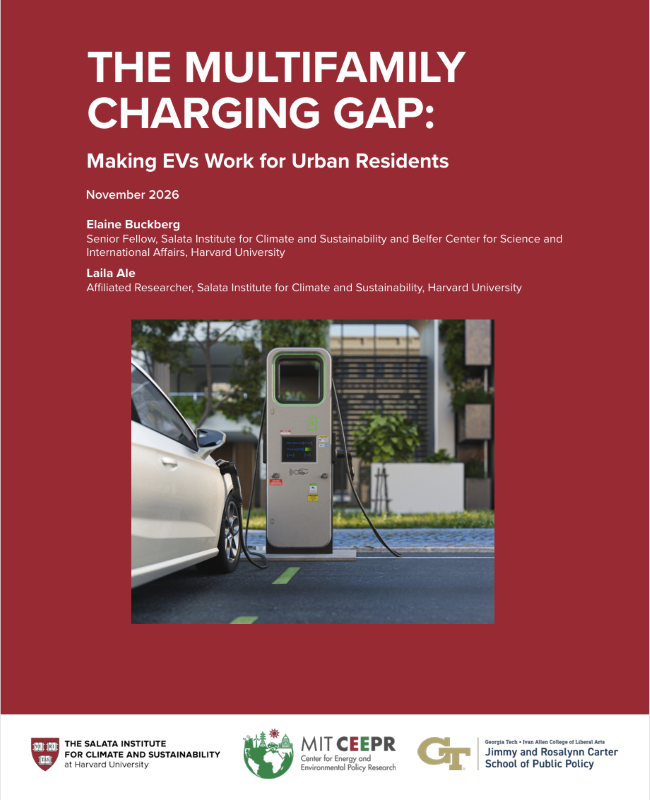
For tens of millions of Americans who live in multifamily housing, charging represents one of the biggest barriers to transitioning to electric vehicles. This Salata Institute report outlines the most powerful levers to enable charging at multifamily buildings and convenient neighborhood locations. This report draws on interviews and workshops with city and state officials, housing developers, utilities and charging companies and provides proven strategies and tools to expand charging.
Key findings include:
- Potential EV owners want charging that is convenient, available, and reliable: A Chicago survey found that almost half of multifamily residents stated that charger availability influenced their decision to buy an EV; another survey found that residents would pay a rent premium of more than $50 for on-site charging.
- Apartment residents vs single family owners: apartment residents often lack a convenient place to plug in, and public charging generally costs more than charging at home. We argue that this gap discourages EV purchases and can deny renters the savings available to people who live in houses.
- Single family home installation vs apartment installation: Adding wiring and chargers can be costly—more so at an apartment building than a house. We call for faster approvals, use of smart technology to bring down install costs, and neighborhood chargers for residents who park on the street.
Preview the report here:
 Loading...

 Reload document
 Open in new tab
More About this Resource
Date: November 1, 2026
Type: Research Reports
Countries: United States
States: States: None