EV Charging at Multi-Family Dwellings
Nicole Lepre2021-01-19T16:48:05-05:00The U.S. Department of Energy reports that more than 80 percent of electric vehicle charging occurs at home.
The U.S. Department of Energy reports that more than 80 percent of electric vehicle charging occurs at home.
This report summarizes the knowledge gathered from a series of four interactive webinar discussions on electrifying public and private fleets, commissioned and convened by the International Zero Emission Vehicle Alliance.
Examples of state governments in the U.S. pursuing equity-centered EV initiatives in LMI communities.
To expand India’s charging infrastructure, this report provides best practices from two of the largest EV markets – China and the United States – for the Indian context. This report aims to provide Indian policymakers and stakeholders with a review of the key challenges facing EV charging infrastructure markets in China and the United States.
Traditional commercial and industrial (C&I) electricity rates can present a barrier to EV adoption by erasing the EV fuel cost savings relative to gasoline or diesel. This paper discusses strategies that can be used to design EV rates for the C&I sector that balance multiple objectives.
This legislative kit includes policy guide providing legislators and their staff members an overview of electric vehicle issues and options. It also includes a review of model legislation and a fact sheet outlining the benefits of electric vehicle legislation and describes four areas where states can take action.
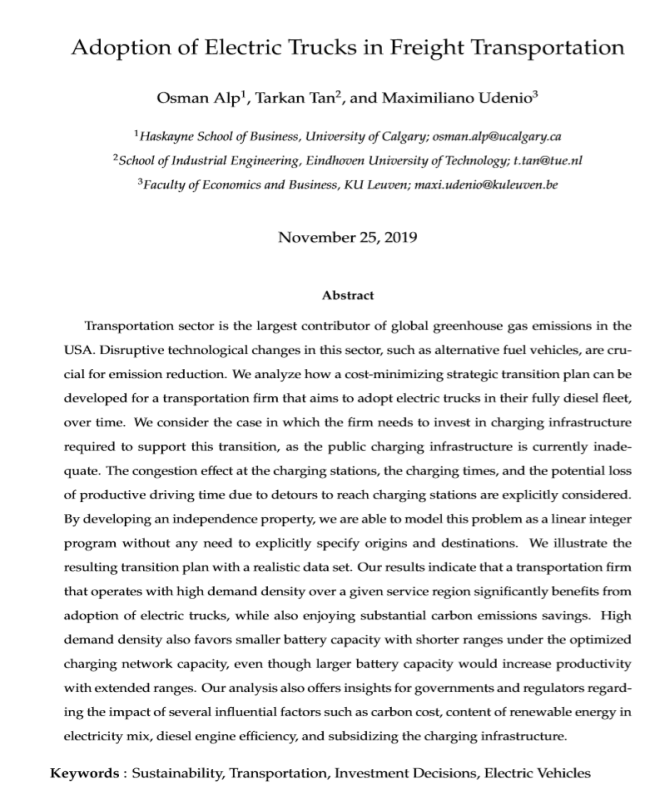
Transportation sector is the largest contributor of global greenhouse gas emissions in the USA. Disruptive technological changes in this sector, such as alternative fuel vehicles, are crucial for emission reduction. This report analyzes how a cost-minimizing strategic transition plan can be developed for a transportation firm that aims to adopt electric trucks in their fully diesel fleet, over time.
This report provides a framework for helping consumer advocates analyze EV policy options (including ratepayer-funded transportation electrification programs) and ensure that the benefits of EV adoption are equitably distributed across customers.
This briefing assesses metropolitan area-level data on electric vehicle registrations and identifies the 25 largest electric vehicle markets, which together represent 42% of new passenger electric vehicle sales globally through 2018.
This brief lays out the challenges and opportunities of vehicle-grid integration (VGI). Electric vehicles (EVs) can help increase the utilization of existing electrical grid assets and put downward pressure on electricity rates by decreasing the average cost of delivering electricity. Many aspects of VGI, including time-of-use (TOU) rates and demand response programs have similar characteristics to other grid management programs.