As we wrap up 2025, we reflect on another successful year of EV Hub and another pivotal year for electric vehicle (EV) policy and the EV market. For our final digest of 2025, I checked in with some of my Atlas colleagues to reflect on the year’s surprises, proudest achievements, and what’s on their radar for 2026. In this digest, we hear from Atlas team members Rachael Nealer, Tina Hodges, Rachel Reolfi, and Atlas Founder Nick Nigro.
Heading into 2026, with the Trump Administration entering its second year and new Congressional dynamics, the landscape will continue to shift and EV Hub will keep you updated on all the latest developments.
What EV or transportation-related development most surprised you, positively or negatively, in 2025?
Rachael: I’ve been happily surprised by the continued progress in electrification despite disruptions this year. People really rose to the occasion, as evidenced by coming together at conferences like Forth Roadmap, states showing leadership in MD/HD through projects like the Clean Corridor Coalition (C3PP) along I-95, and 42 states with approved FY26 NEVI plans (with 9 states fully built out).
Tina: I was happy to see states jump back in and make progress deploying new EV chargers after the federal government unfroze funds under the National Electric Vehicle Infrastructure (NEVI) Program. The fully built out states now have enough chargers along key highway corridors to enable long distance EV travel, and, across 38 states, we are tracking over 4,000 DC fast charging ports that have been awarded.
On the discouraging side, I was surprised to see more and more states place higher fees and taxes on EVs. As of the writing of our September report, in a majority of states, EV drivers pay more in road user fees than drivers of gasoline vehicles pay in gas taxes.
Nick: The biggest surprise for me in the EV market was how quickly the auto industry pivoted to reflect the realities of the market. There’s been a steep build-up towards pushback from the industry on an all-electric future. Automakers haven’t given up, but they’ve recalibrated – especially after the loss of vehicle purchase incentives and regulatory changes. Ford’s recent $19.5 billion write-down and reevaluation of factories and models was a big deal. It’s clear they’re setting a new baseline for how they’ll be judged. For me, the shift toward hybrids and extended-range EVs is also notable, and the focus on battery investments – both for vehicles and grid storage – I think will really shape the next few years.
Which Atlas product or project this year are you most excited about/proud of contributing to?
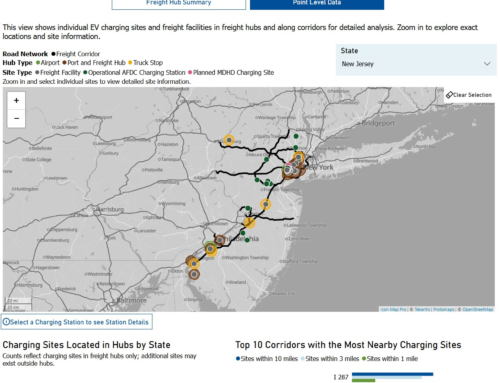
Rachael: The NEVI Dashboard stands out for me. It’s been an essential tool for tracking state progress and providing transparency to stakeholders and the public.
Tina: I’m proud of our work on the NEVI Dashboard, especially as it highlights the progress states are making in building out a reliable, affordable, equitable national EV charging network. It’s been a key resource for stakeholders and the public.
Rachel: I’m proud of my Clean Transportation Works report with Tina, which outlined the progress and potential impacts of about a dozen Federal clean transportation programs, focusing on the Infrastructure Investment and Jobs Act. We made the case that these investments make everyday Americans’ lives better by lowering air pollution, saving money, and providing an economic boost to communities while setting the stage for future federal investment.
Nick: For me, it was what Atlas was able to do as a company in helping inform both lawmakers and the advocacy community, as well as industry stakeholders in Washington, during the summer when the One Big Beautiful Bill (OBBB) was being voted on. I think our team did a fabulous job of getting information out there, whether it was about the investments at stake, where those investments were physically located, or who stood to lose the most with the loss of tax incentives for the clean economy. We also surfaced what lawmakers were saying about these incentives and investments in their districts. By making that kind of information transparent, Atlas helped make it possible for more of the incentives and the structure of the Clean Economy framework created by the Inflation Reduction Act to be sustained. Most notably, keeping the battery incentives alive was probably the single most important success of that negotiation in Washington. I’m very proud of Atlas’s role in making sure people had the right information before decisions were made.
As the Trump Administration’s second year begins, what climate or transportation policy or process will you watch most closely in 2026?
Rachael: I expect to see great progress from both the public and private sectors in building a national charging network, and I’m excited to see how our research community comes together through the newly formed Association of Sustainable Transportation Researchers (ASTOR) and its annual conference.
Tina: Something I’ll be closely watching is the current federal transportation authorization bill process. The current bill will expire in September 2026, and Congress will need to pass a new bill (or extend the old one a couple times before they get around to it). Will the reauthorization include the EV-friendly policies of the past one (IIJA), such as programs dedicated to funding EV charging infrastructure deployment? Our report titled Clean Transportation Works analyzes the impacts of IIJA programs with forward-looking ideas for the next reauthorization bill.
Rachel: Too many to name, but one I’m particularly interested in is the NEVI program. That funding was starting to roll out in earnest in many states before the start of the Administration, and I’m hopeful that they regain momentum in ‘26.
Nick: Battery strategy really will dominate. With incentives gone for vehicles but intact for batteries, we can likely expect automakers to reposition as energy storage players (like Ford). This is a race for the future of one of the largest industries in the world, and balancing speed with market readiness will define success. Watch out for hybrid and plug-in hybrid vehicle resurgence as a bridge technology, alongside grid-scale storage investments.