Charging Infrastructure

Preparing for an Electric Vehicle Future: How Utilities Can Succeed

2020-02-10T19:50:47-05:00

Combining results from an industry survey with personal insights of utility industry experts, the paper delivers recommendations and best practices for improving how utilities should support, plan and deploy EV charging infrastructure.

Preparing for an Electric Vehicle Future: How Utilities Can Succeed2020-02-10T19:50:47-05:00

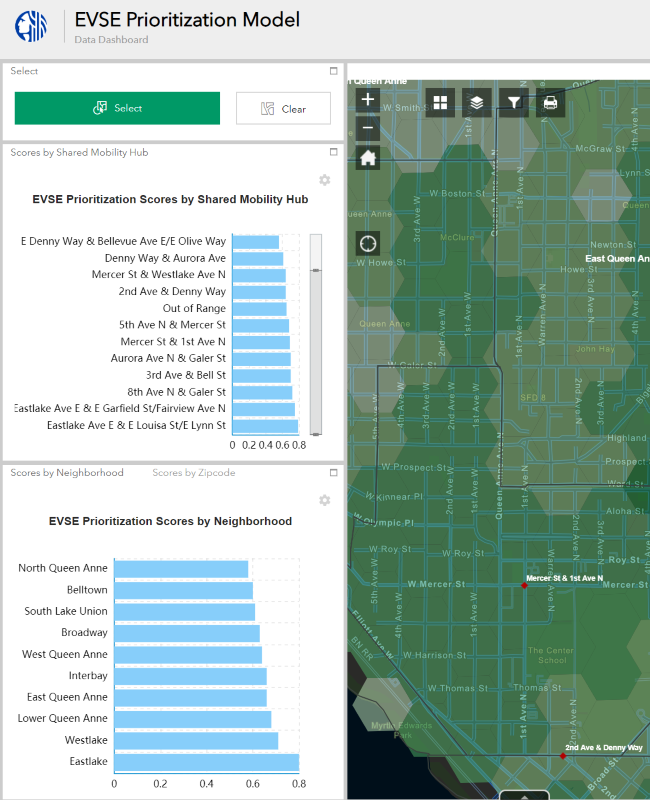
Seattle EVSE Siting Model

2019-10-10T16:48:17-04:00

Seattle’s Dynamic Electric Vehicle Supply Equipment (EVSE) Siting Model is a GIS-based tool to guide EVSE deployments that align with the City’s priorities and the EV Shared Mobility Project’s objectives. The model includes a variety of different data sources that are nearly all publicly available.

Seattle EVSE Siting Model2019-10-10T16:48:17-04:00

Electric Vehicles: Key Trends, Issues, and Considerations for State Regulators

2019-12-24T11:35:39-05:00

This issue brief provides data about the trends in EV adoption, a synopsis of the types of decisions commissions are facing, and examples of recent state regulatory approaches to EV questions.

Electric Vehicles: Key Trends, Issues, and Considerations for State Regulators2019-12-24T11:35:39-05:00

Assessing the Business Case for Hosting Electric Vehicle Charging Stations in New York State

2019-09-23T14:25:01-04:00

This white paper evaluates the business case of hosting a Level 2 electric vehicle (EV) charging station in New York. The analysis relied on charging use data provided by the New York State Energy Research and Development Authority (NYSERDA) along with real-world data on equipment use, costs, revenue, and assumptions derived from industry reports and original research. The report explored scenarios that vary charging use and revenue sources to better understand the key factors that drive profitability from hosting these stations.

Assessing the Business Case for Hosting Electric Vehicle Charging Stations in New York State2019-09-23T14:25:01-04:00

Utilities have a Vital Role in Advancing Electric Vehicle Infrastructure Through the VW Settlement

2019-10-09T14:33:45-04:00

The paper argues that the electric vehicle (EV) infrastructure gap needs to be closed for this market transformation to occur and that electric utilities and public utility commissioners can play a critical role in addressing this gap.

Utilities have a Vital Role in Advancing Electric Vehicle Infrastructure Through the VW Settlement2019-10-09T14:33:45-04:00

Electric Utility Filing 1st 2019 Bi-Annual Update

2020-05-21T16:21:34-04:00

This report provides an overview of electric utility filing activity related to transportation electrification for the first half of 2019. From January 1 through June 30, 2019, commissions throughout the United States have approved more than $116 million in electric utility investment in transportation electrification.

Electric Utility Filing 1st 2019 Bi-Annual Update2020-05-21T16:21:34-04:00

Estimating electric vehicle charging infrastructure costs across major U.S. metropolitan areas

2019-08-29T12:35:31-04:00

This paper analyzes the capital costs of the electric vehicle charging infrastructure needed for public, workplace, and home charging for the most populous 100 metropolitan areas in the United States from 2019 through 2025. The 100 metropolitan areas analyzed represent 88% of all new electric vehicles sold and 75% of the overall U.S. vehicle market.

Estimating electric vehicle charging infrastructure costs across major U.S. metropolitan areas2019-08-29T12:35:31-04:00

Estimating the infrastructure needs and costs for the launch of zero-emission trucks

2019-08-29T12:28:59-04:00

This paper quantifies the infrastructure needs and associated costs for implementing battery electric and hydrogen fuel cell trucks in three applications: long-haul intercity tractor-trailers, drayage trucks, and medium-duty delivery trucks.

Estimating the infrastructure needs and costs for the launch of zero-emission trucks2019-08-29T12:28:59-04:00

Interoperability of Public Electric Vehicle Charging Infrastructure

2019-08-27T15:30:50-04:00

In their new white paper,  the Electric Power Research Institute (EPRI) covers four core challenges related to public charging infrastructure and how they impact customers, site hosts, and electric companies respectively. For the purpose of this paper, interoperability is defined as the process of harmonizing of standards, technology, and practices for EV charging in a way that provides transparency for customers and encourages ease of use.

Interoperability of Public Electric Vehicle Charging Infrastructure2019-08-27T15:30:50-04:00

Impact Report: AEP Ohio’s Role in Quadrupling EV Charging Infrastructure in Columbus

2019-08-29T15:33:04-04:00

This impact report outlines the progress that the electric utility AEP Ohio has made on their transportation electrification programs and how this interfaces with the overall goals of Smart Columbus. In addition to expanding the charging network throughout the region, AEP Ohio is committed to grid decarbonization to further enhance the emissions saving potential of the Smart Columbus programs.

Impact Report: AEP Ohio’s Role in Quadrupling EV Charging Infrastructure in Columbus2019-08-29T15:33:04-04:00