Image Source: Shutterstock
On January 27, 2026, Tesla and Pilot Travel Centers announced a partnership to deploy Megawatt Charging System (MCS)–capable charging infrastructure for Tesla Semi trucks at select Pilot locations along major U.S. freight corridors, including I‑5 and I‑10. The first sites are expected to open in Summer 2026, with four to eight megawatt‑scale charging stalls per location and power levels of up to 1.2 megawatts (MW) per stall.
For the medium‑ and heavy‑duty (MDHD) electrification sector, this announcement is a sign that freight electrification is beginning to take shape outside of just ports or warehouses; many of Pilot’s travel centers sit squarely along major U.S. freight corridors, and Tesla’s MCS deployment signals growing confidence that public, corridor‑based charging can support regional and long‑haul electric trucking, not just depot‑based operations.
From Press Release to Geography
That sign became clearer in late February, when Tesla released an updated “Find Us” map showing 66 “Megacharger” locations, including two operational sites and 64 “coming soon” locations across 15 states (see Figure 1). Over half of the planned sites are concentrated in California and Texas, with additional clusters in states like Florida, Georgia, Illinois, Washington, and Nevada. The sites largely align with interstate highways, port regions, and major logistics hubs, reinforcing a pattern that infrastructure is starting to build-out along freight corridors to be able to support longer routes for MDHD EVs.
Figure 1. Tesla Megawatt Charger Sites Planned or Operational (as of March 2026)
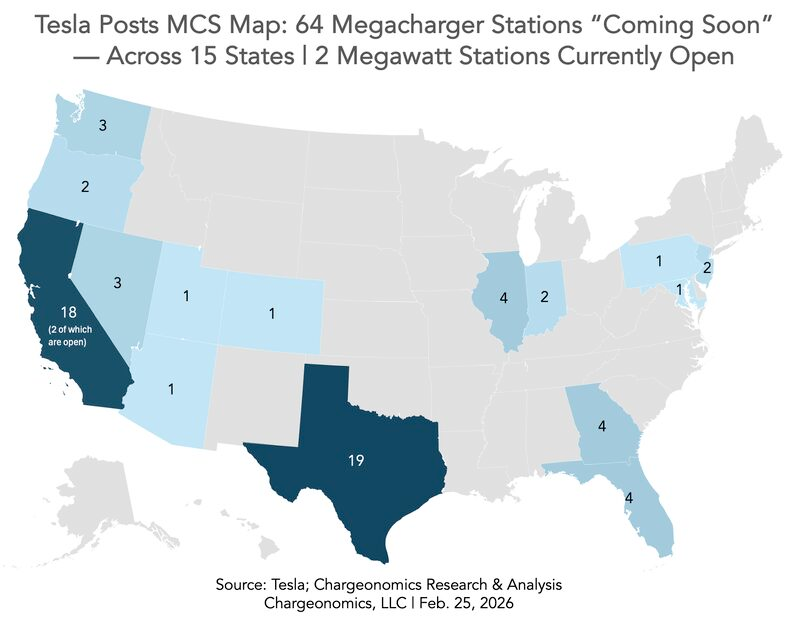
Early Class 8 deployment of EVs largely focused on port drayage, or regional haul use cases, where trucks returned to base frequently. Tesla’s Megacharger map and the location of the MCS infrastructure reflects those same dynamics, prioritizing states and corridors where freight demand, early fleet adoption, and enabling conditions already overlap.
How This Compares to What We’re Tracking
Atlas EV Hub’s Electric Freight Dashboard, built with the Electrification Coalition, provides a broader lens on how this announcement fits into the national MDHD charging landscape. Using data from the Alternative Fuels Data Center (AFDC) combined with Atlas’ manual tracking, the dashboard identifies MDHD‑capable public charging sites – including stations that may not be freight‑dedicated but can physically support truck operations for early-adopter fleets.
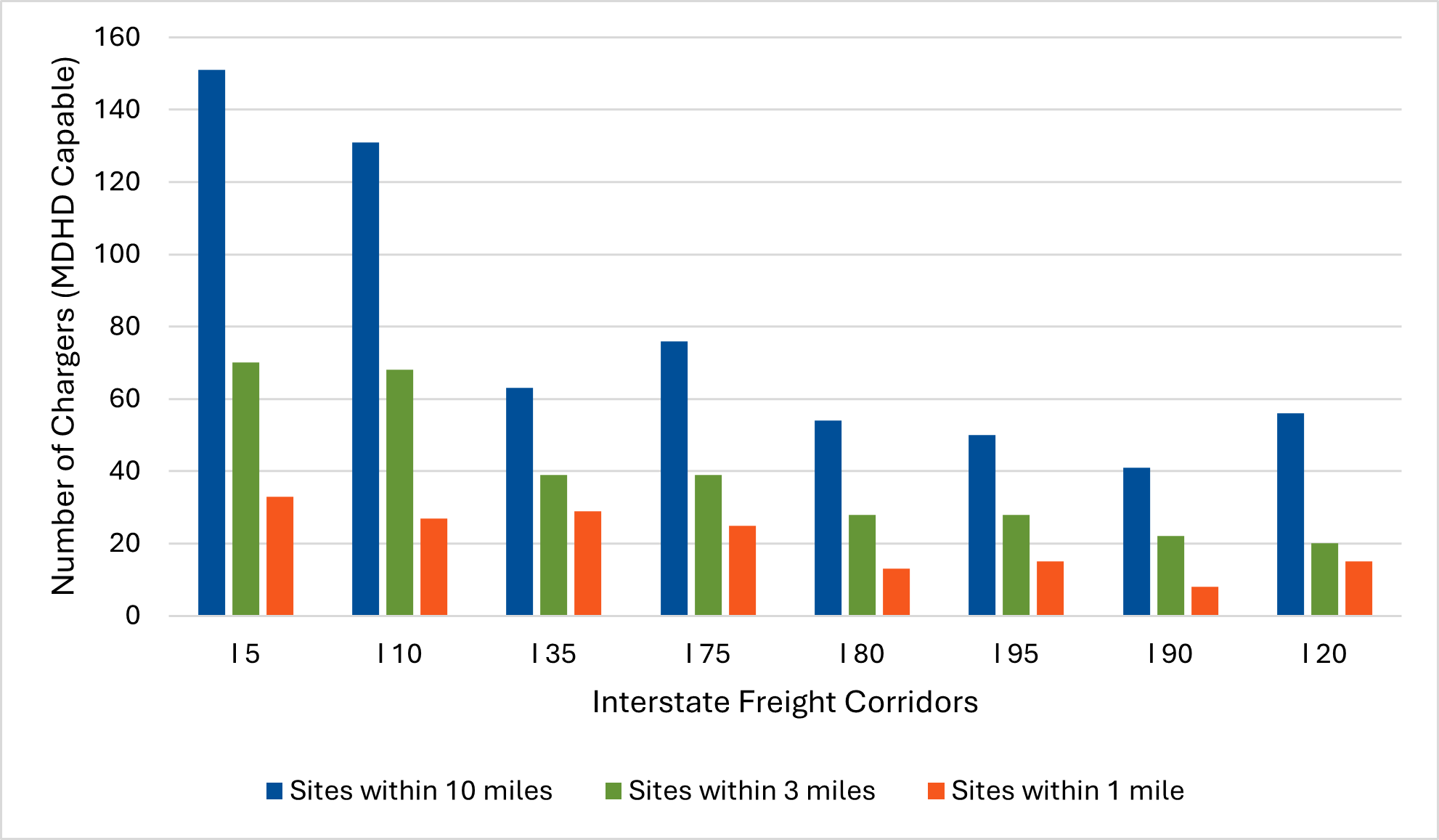
Across major corridors, the dashboard shows that early MDHD‑capable charging activity is already clustering along the same routes Tesla and Pilot are targeting. For example, corridors such as I‑5 and I‑10 rank among those with the highest number of MDHD‑capable charging sites within close proximity, reflecting sustained investment in West Coast and Sun Belt freight routes (see Figure 2).
Figure 2. Top Freight Corridors with Most Nearby Charging Sites
Source: Electric Freight Dashboard
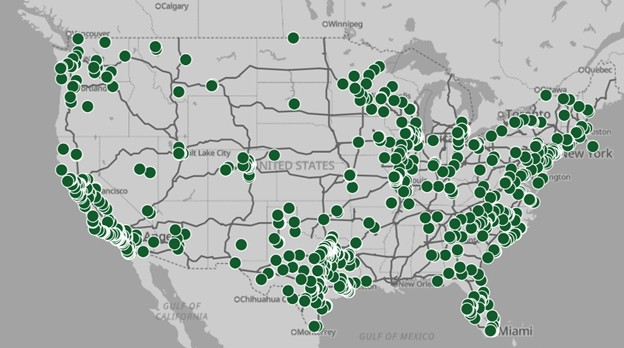
At the state level, the overlap is even more pronounced. States like California, Texas, Illinois, and Pennsylvania show comparatively higher levels of hub‑adjacent MDHD‑capable charging, aligning with large freight markets. These are the same states that appear repeatedly in Tesla’s Megacharger plans and in Pilot’s initial build‑out footprint (see Figure 3).
Figure 3. AFDC Charging Sites That are MDHD Capable (as of March 2026)
 Source: Electric Freight Dashboard
Why These States, and Why Now
The states highlighted in Tesla’s Megacharger rollout share three common characteristics that also emerge in Atlas’ data:
- Freight intensity: Major ports, intermodal hubs, and warehouse clusters drive high daily truck volumes.
- Supportive policy and incentives: Programs within these states, such as GVWR weight exemptions, MDHD vehicle incentives, and utility investment supporting zero‑emission trucks and charging help offset the higher upfront cost of electric Class 8 vehicles.
- Early fleet demand: Existing Tesla Semi deployments and orders tracked on the Electric Freight Dashboard provide a clear customer base for megawatt‑scale infrastructure.
Together, these factors help begin to explain why investment is concentrating geographically in select states, and why public corridor charging is beginning to support fleet electrification efforts.
Looking Ahead
The Pilot–Tesla announcement is a welcome announcement for electrified fleets looking to go farther with their EVs. As megawatt‑scale charging moves from pilot projects to corridor networks, route flexibility for electric trucks improves, enabling more complex freight operations and reducing reliance on single‑site depots.
Atlas will continue tracking these developments through the Electric Freight Dashboard, updating the tool as new charging locations are announced and as corridor‑level patterns evolve. For policymakers, utilities, and fleet operators alike, the message is becoming clearer: the geography of electric freight is taking shape, and it increasingly mirrors the geography of freight itself.