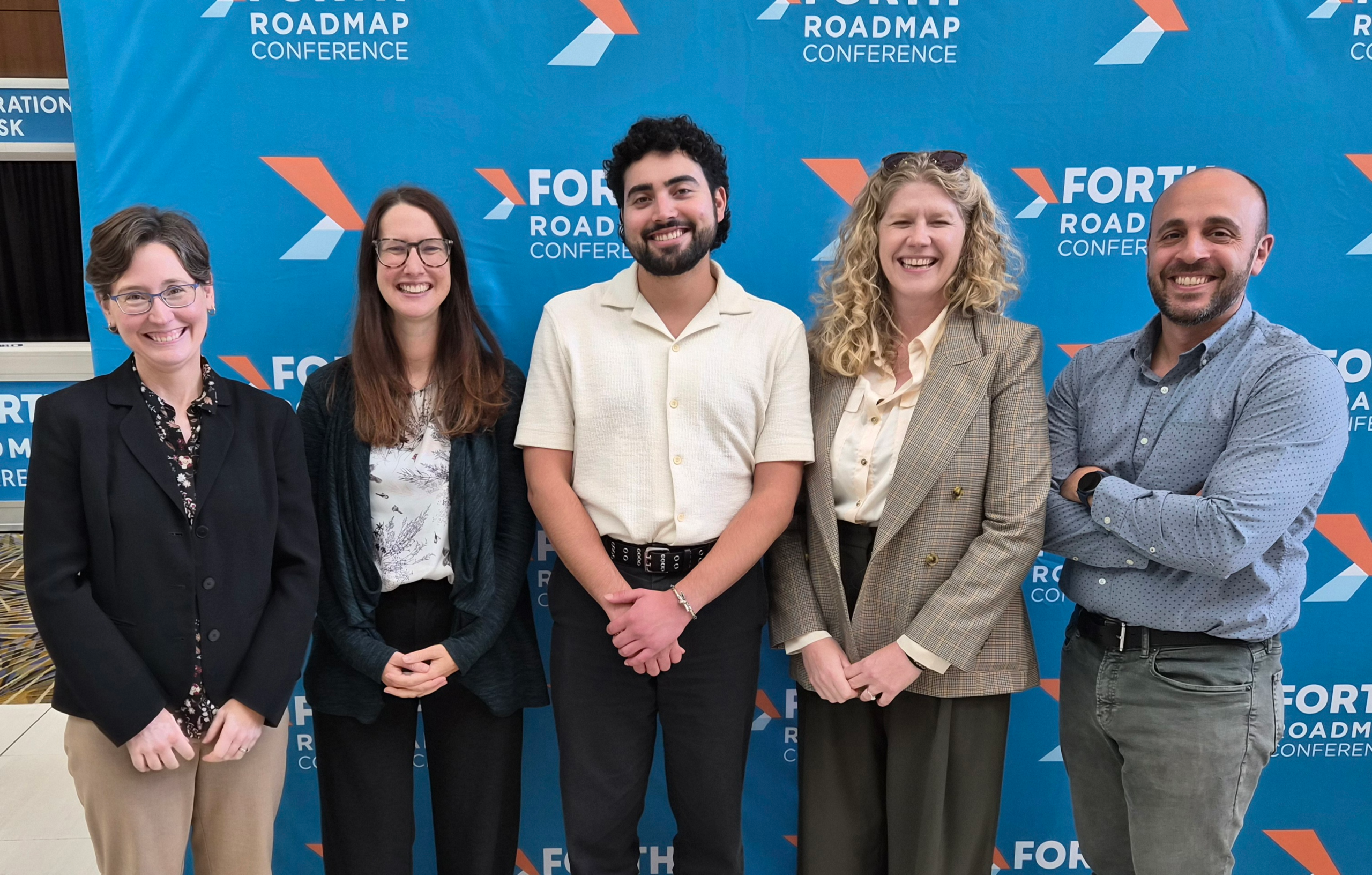
Two weeks ago, hundreds of members of the transportation electrification community gathered in Detroit for this year’s Forth Roadmap Conference. Several members of our team at Atlas Public Policy were there and fanned out across plenaries, workshops, and hallway huddles to present some of our latest research and take the pulse of the EV industry. Below are some key takeaways from Rachael Nealer, Tina Hodges, and Matthew Vining.
Despite setbacks, there are positive indicators for the EV market
Matthew: The market has definitely taken a hit and things look different than what our industry expected this time a year ago. Despite drawbacks and cancellations of OEM commitments or electrification plans, there are still a lot of positives to look toward. The federal government has acted on and signaled their interest in a strong domestic supply chain for critical minerals and batteries – the most expensive part of an EV! I remember others also mentioned that at times when things feel the most challenging, this is where and when the best solutions come from. We are already seeing strong pivots from OEMs adapting their strategies (e.g. Ford), states offering bolstered incentives to consumers to purchase EVs, and people working on speeding up charging deployments across all residential types.
Multistakeholder engagement is key to successful deployment of charging infrastructure at multifamily housing (MFH)
Matthew: Panelists really hammered in on the idea that utilities and property owners need to be involved in the process of integrating MFH charging throughout all stages. Challenges persist in lack of infrastructure that is EV-ready, coordinating with utilities and grid upgrades, and the labor of ongoing maintenance and operations of installed chargers. Specifically, coupled with easy to access technical support and initial assessment of what works best for different MFH types are key to scaling access for MFH charging moving forward. MFH, more than other types of residences, requires easy to identify places to seek support and flexibility in options for charging installation set-up, billing, and rates.
There is a need for better storytelling and connecting EVs with tangible benefits
Tina: One speaker stressed that we need to tell a better story about how EVs make people’s lives better – especially where affordability gains are tangible. A striking example came from video interviews with gig drivers who said the cost savings from driving an EV help them make a better living. The suggested playbook for better storytelling was: 1) find a use case, 2) find a partner, 3) amplify their voice.
In addition, there was discussion amongst attendees over everyday value propositions. For example, someone mentioned how pet owners love ‘dog mode’ – keeping the car conditioned from the battery so a dog stays safe during a quick errand. It’s a small feature but one that resonates and makes the benefits concrete.
We will keep making progress on EV charging deployment
Rachael: My wish for folks deploying charging right now is to keep a list of projects that are truly ready to go. With NEVI continuing, states will finish corridors and then likely steer funds toward community charging and medium- and heavy-duty charging. We’ve put in years of planning assuming funding would be available, so let’s be ready for the moment. Collaboration will be harder because it’s one of the first things to go in times of tight budgets. So we have to be diligent and strategic about it. In the early days, we did amazing work on shoestring budgets. We’re built for this and we’ll keep making progress.
A special thanks to Tina, Matthew, and Rachael for sharing their insights from Forth Roadmap 2025. If you attended a session we missed or have insights you think we should amplify in a future Digest, let us know.