Integrating Plug-in Electric Vehicles (PEVs) into Household Fleets
Spencer Burget2021-09-10T19:00:51-04:00Factors Influencing Miles Traveled by PEV Owners in California.
Factors Influencing Miles Traveled by PEV Owners in California.
An analysis of residential electricity rates for home charging.
This report addresses inequities in California's electric vehicle infrastructure related to the state's CALGreen building code.
This paper interprets and analyzes charging price information from PlugShare, a crowd-sourced EV charging data platform.
By 2025, 40 percent of all non-Postal Service federal fleet vehicles and 97 percent of U.S. Postal Service (USPS) vehicles can be replaced with EV at a lower total cost of ownership TCO than comparable gas and diesel vehicles. This means that choosing an EV over a conventional vehicle will save money over the life of the vehicle.
This report reviews the status of the last-mile, medium and heavy-duty electric vehicle (EV) market, and identifies actions for Ohio stakeholders that help facilitate the transition to an EV future.
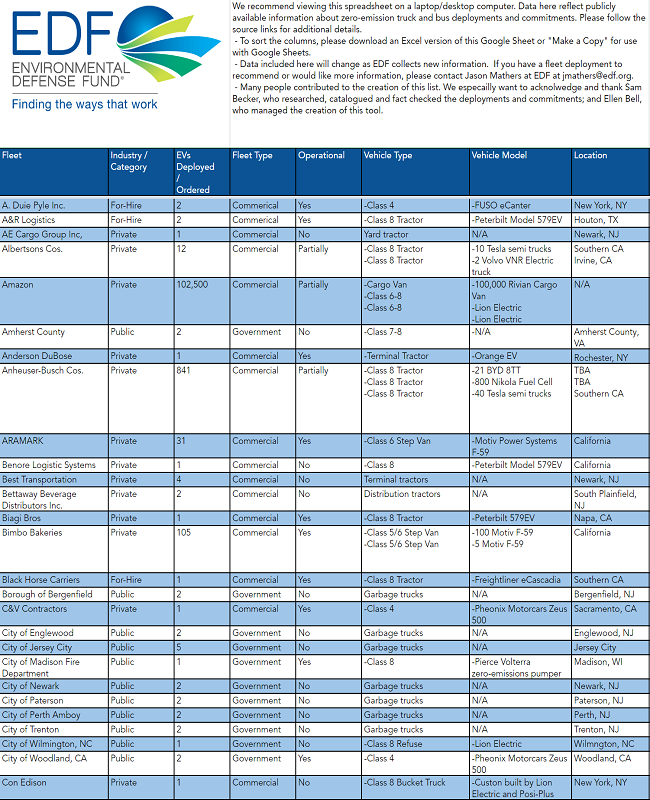
EDF has identified nearly 500 current deployments and commitments to deploy nearly 300 times more vehicles. This list has been created from compiled from press releases, articles, CSR reports and other public materials.
This paper assesses growing home, workplace, and public charging needs in the United States through 2030.
ICCT published a life-cycle study on the GHG emissions of both combustion engine and electric passenger cars.
4 signs of a growing U.S. supply chain for zero-emission trucks and buses